Reading the walls
The wall around Kaleiçi is not from one period. The lower courses are Hellenistic, the marble above is Roman, and the patching above that is Seljuk and Ottoman. You can follow the whole history of the city by looking at one stretch of masonry.
The four buildings that tell it
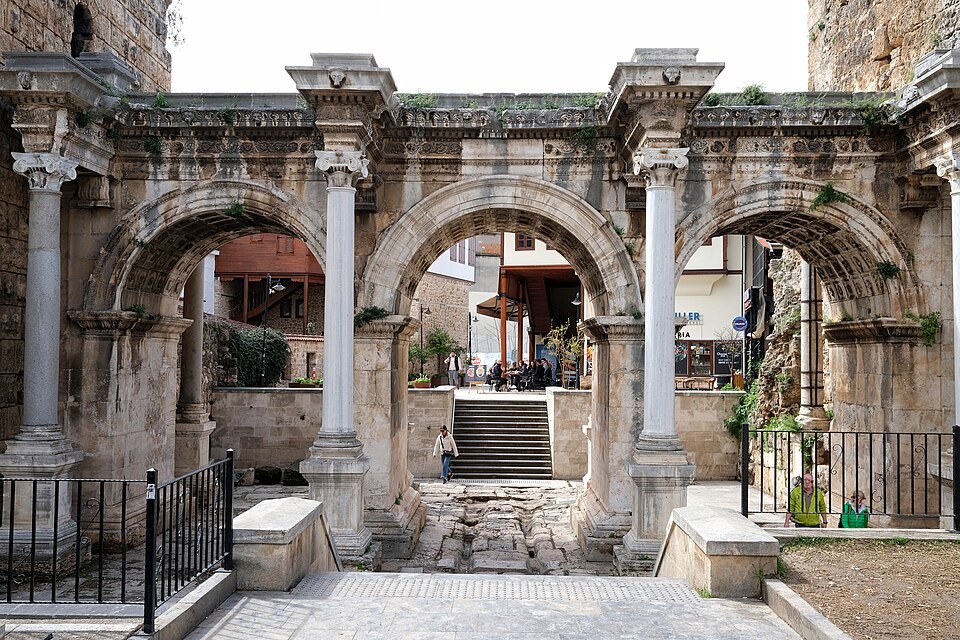
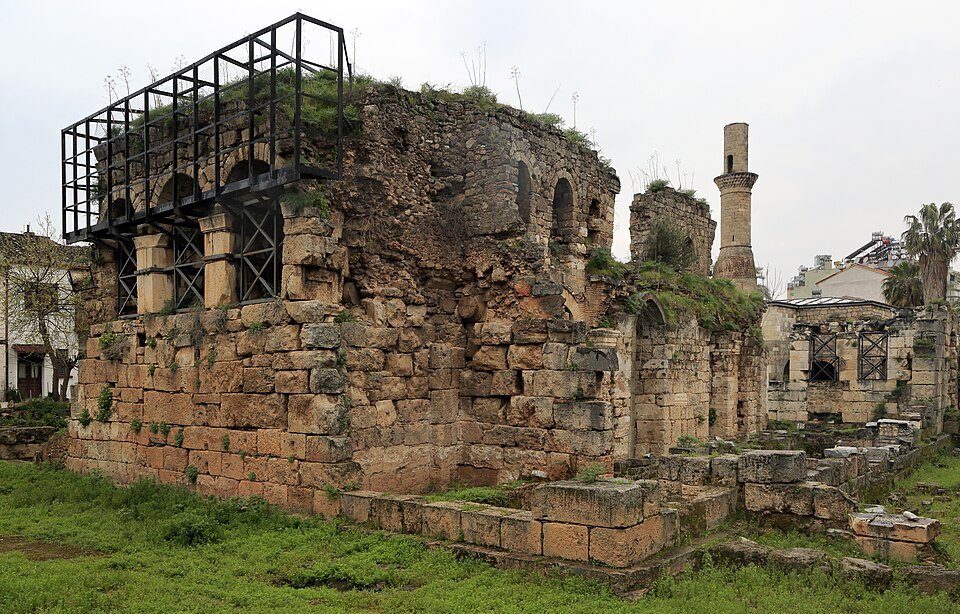
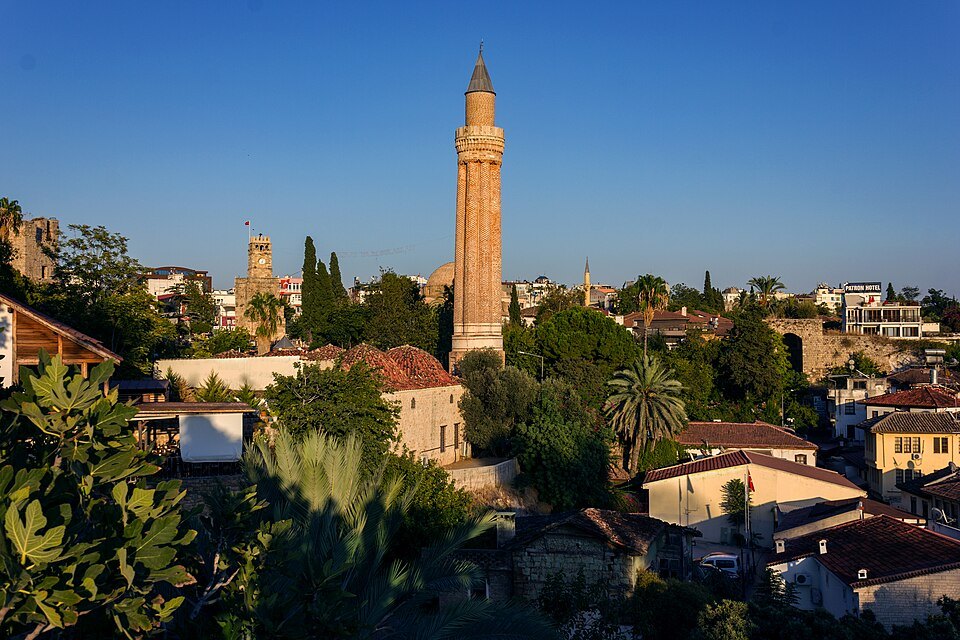
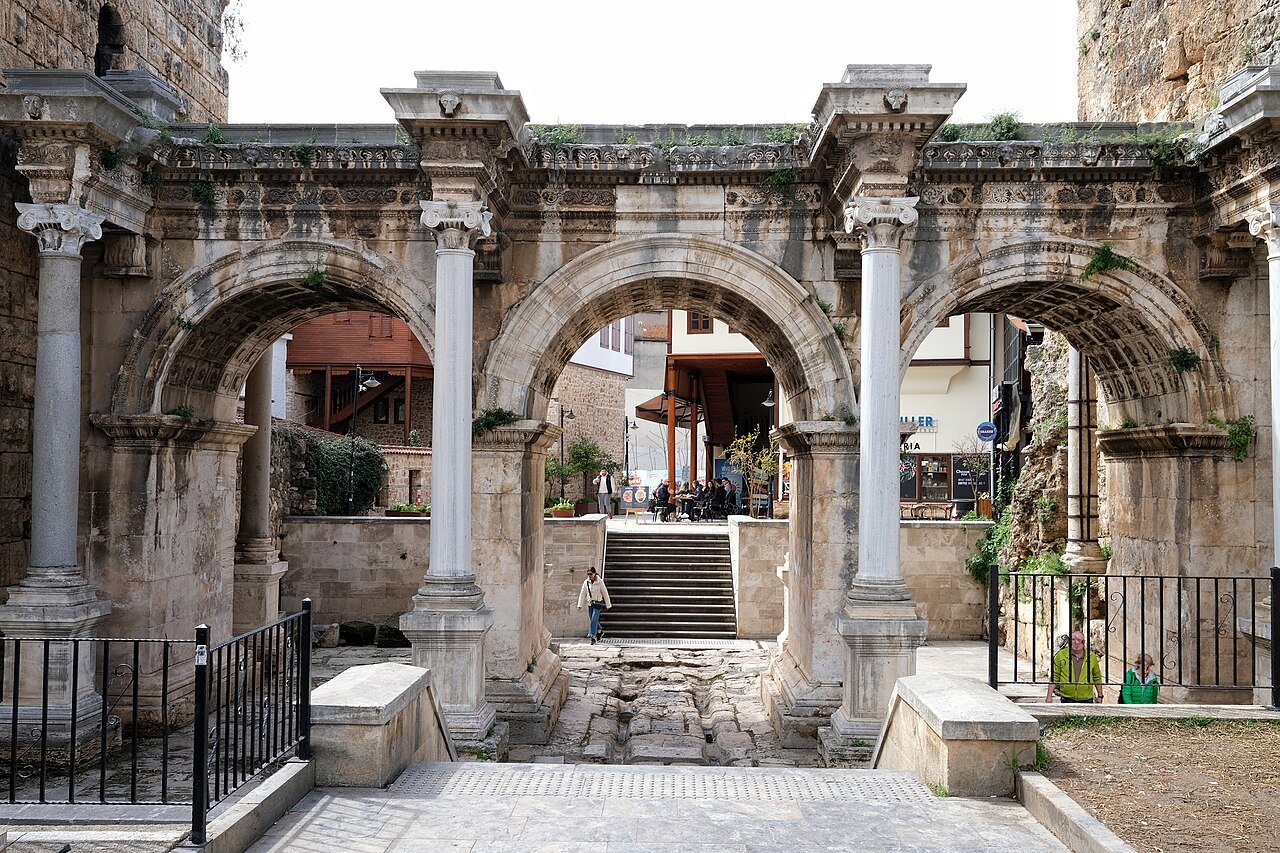
Hadrian's Gate — Roman, AD 130, built for one imperial visit. Hıdırlık Tower — Roman, second century, purpose still argued over. The fluted minaret — Seljuk, thirteenth century, and the point where Anatolian brick architecture reached this coast. The Truncated Minaret — temple, then church, then mosque, then church, then mosque again, and now a roofless ruin that contains all of it.
And where the objects went
⭐ The statues and sarcophagi that were found in the region are almost all in the Antalya Museum. ⚠️ The museum closed in July 2025 and its building was demolished for a new one, so check that it has reopened before you plan around it.