What it is
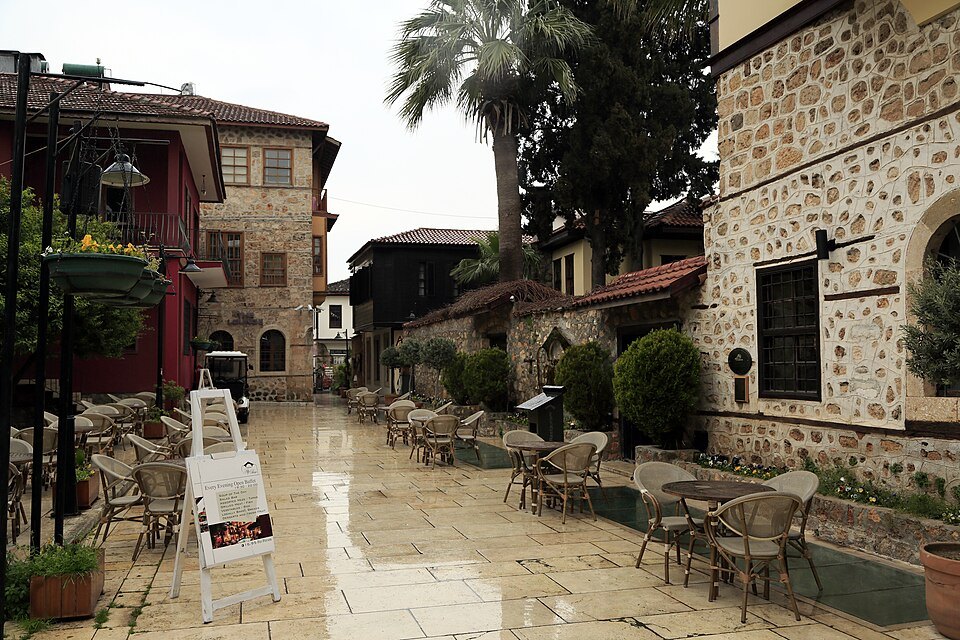
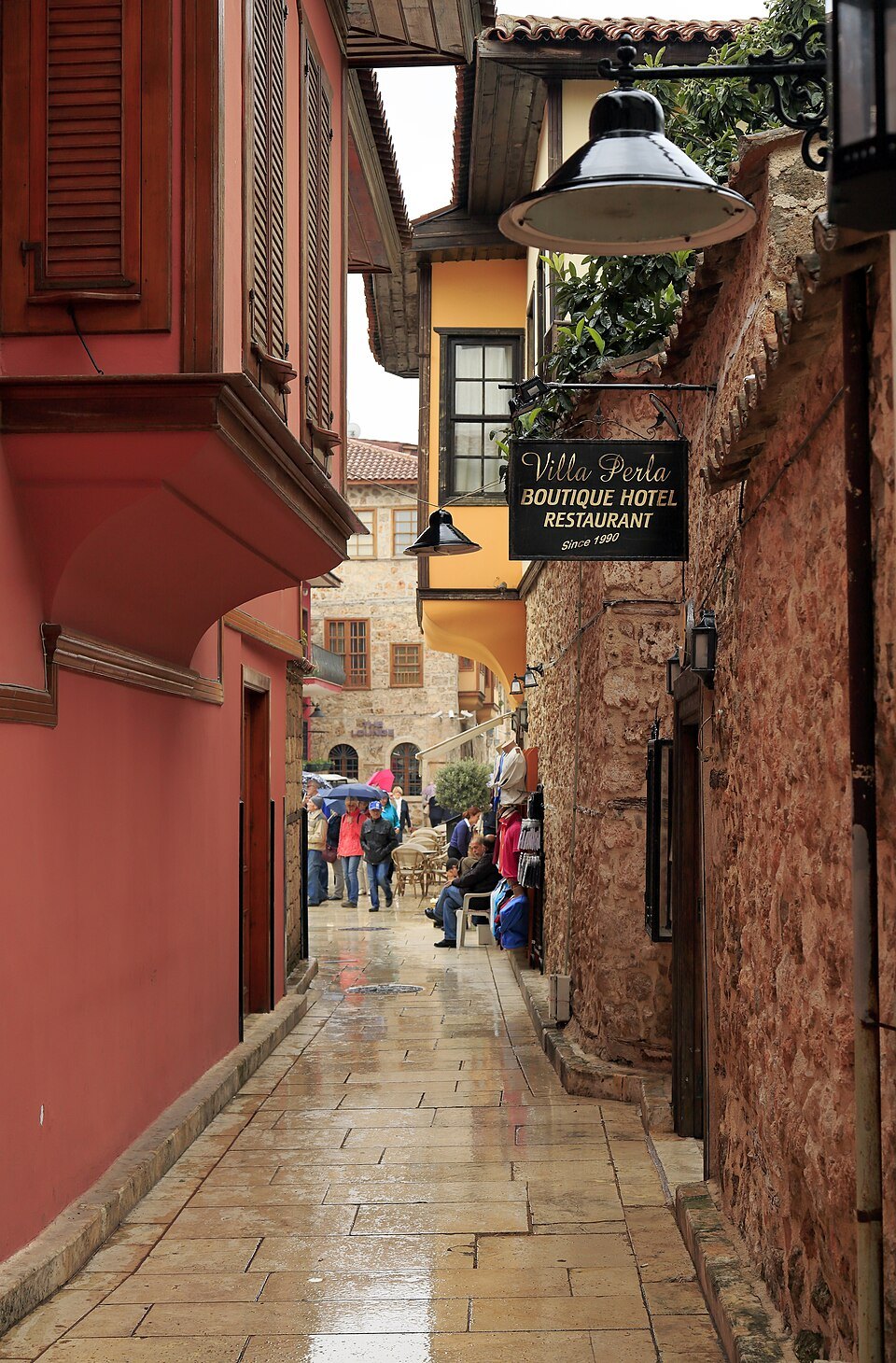
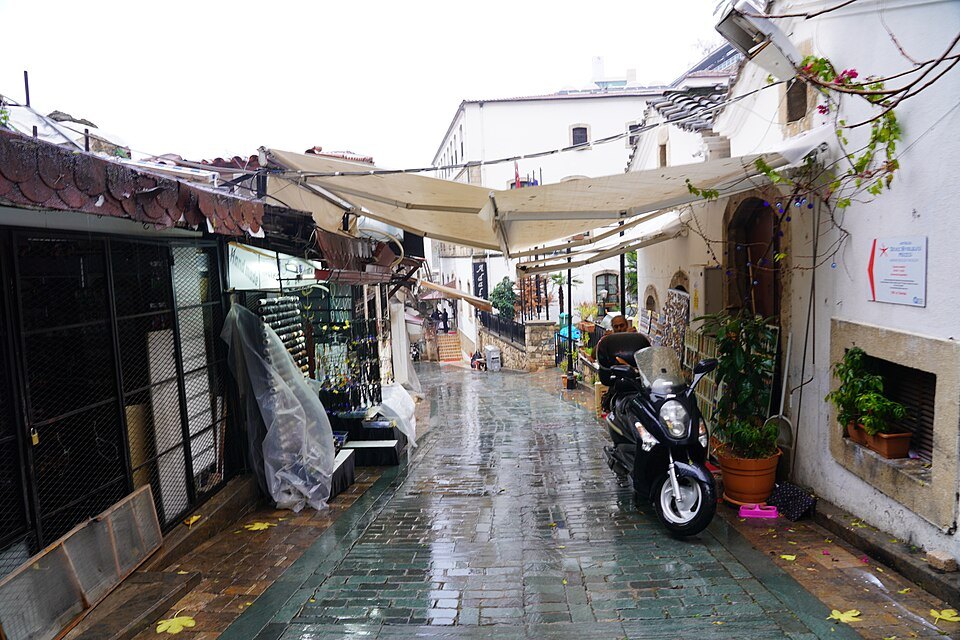
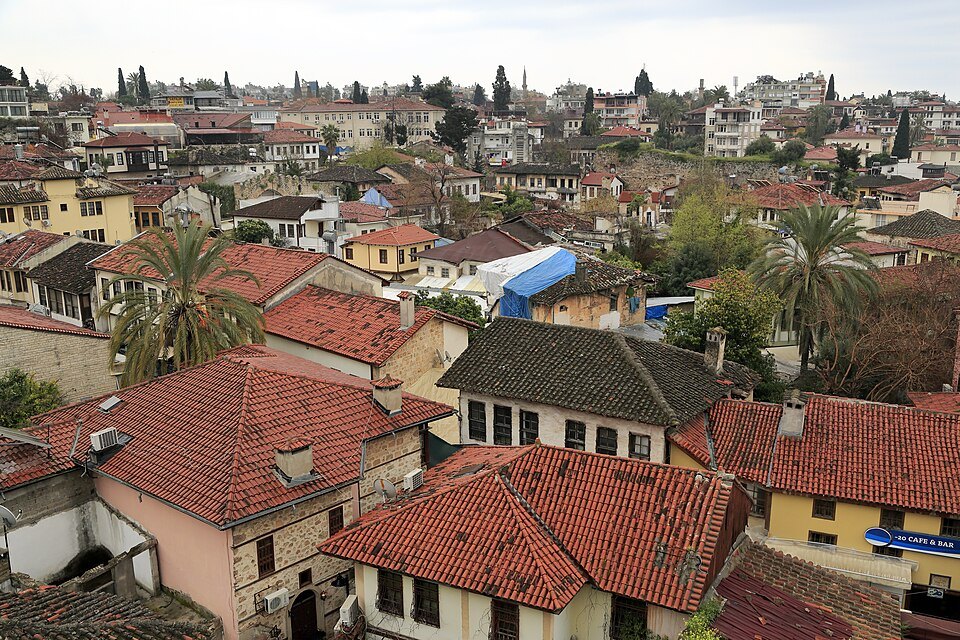
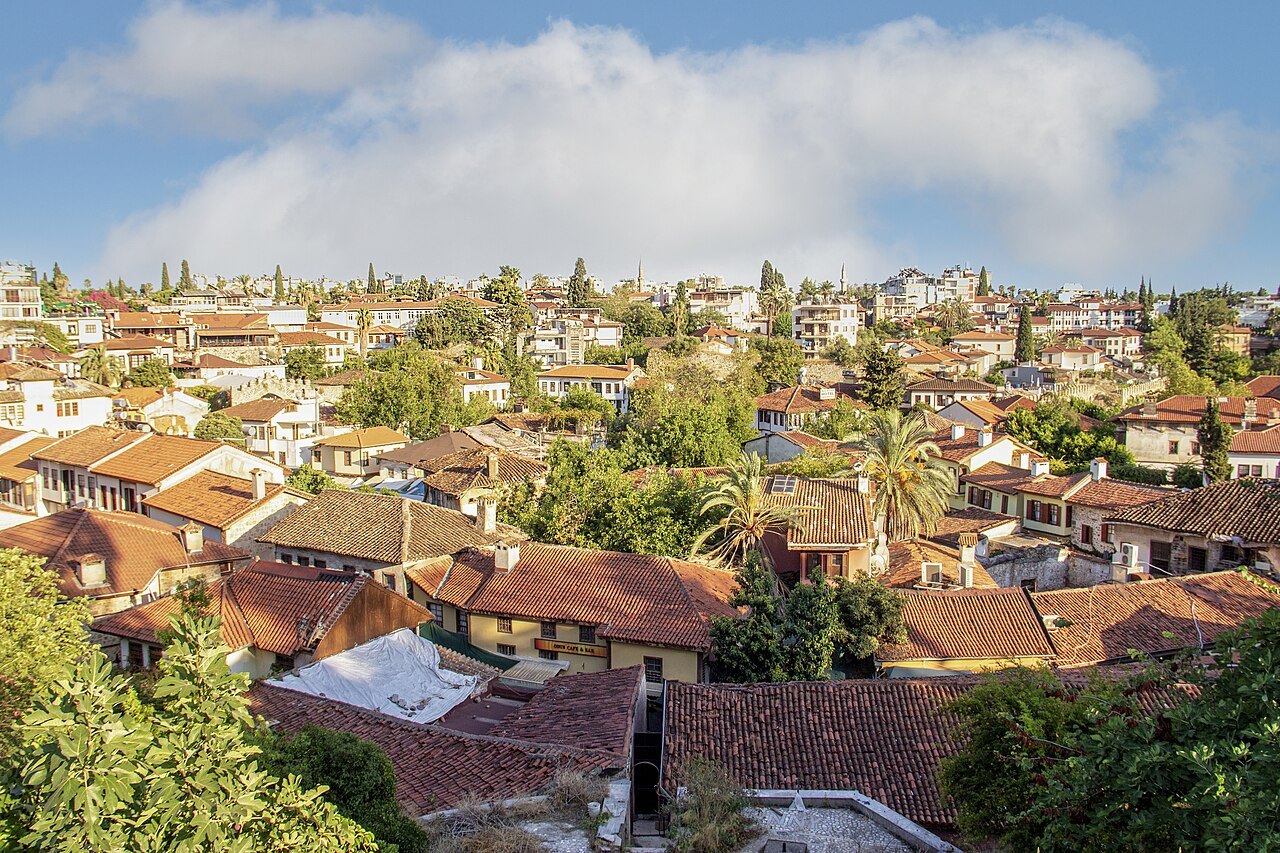
Kaleiçi means inside the castle, and that is exactly what it is: the old town of Antalya, wrapped in walls that are Hellenistic at the bottom, Roman above that, and Seljuk and Ottoman above that again. Inside is a maze of narrow lanes and tall wooden-fronted houses with overhanging upper storeys, built to shade the street.
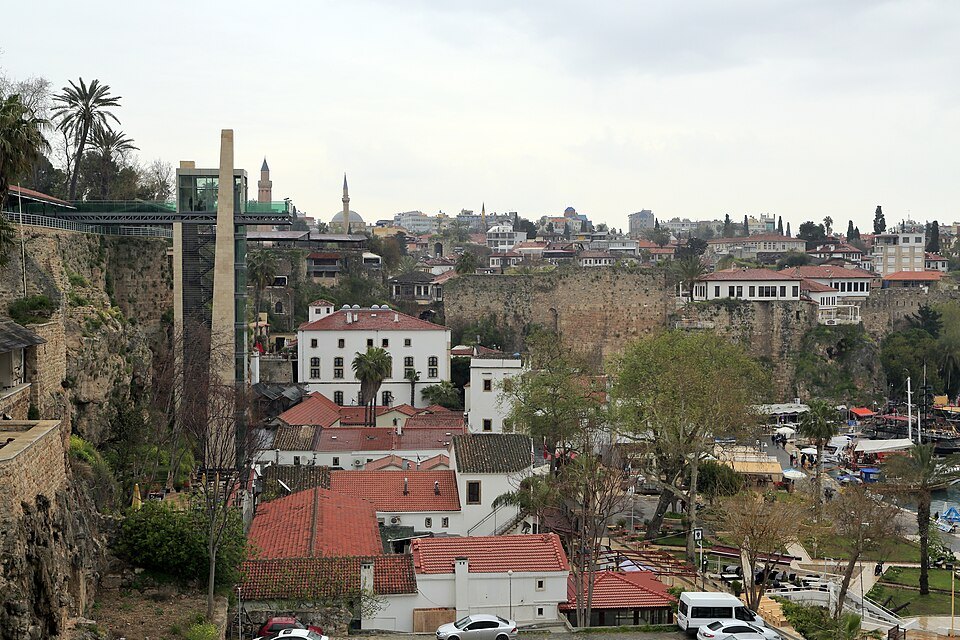
⭐ Everything in the quarter runs downhill to the old harbor. That harbor is why the city exists — it is the only sheltered anchorage on a long stretch of cliff — and the town was built above it, inside walls, looking down.
Walking it
There is no route and no need for one; the quarter is small and you cannot get badly lost with the sea on one side and the walls on the other. The landmarks to steer by are Hadrian's Gate on the inland edge, the fluted minaret in the middle, and Hıdırlık Tower at the far corner above the cliff.
⚠️ Much of what you see is restored rather than original — the quarter was close to derelict before a long conservation programme from the 1980s onward. The restoration is why it is still standing; it also means the woodwork is newer than it looks.
A city founded by a king of Pergamon
Kaleiçi is the core of ancient Attaleia, founded in the second century BC by King Attalus II of Pergamon. A statue of him, 2.6 meters tall, was put up by the metropolitan municipality in 2004, modeled on an Attalus torso in the Pergamon Museum in Berlin and a separate portrait head. After the kingdom of Pergamon ended in 133 BC the city was briefly independent, then fell to pirates. In 77 BC the Roman general Servilius Isauricus brought it into the Roman Republic, and in 67 BC Pompey used it as a naval base. Emperor Hadrian visited in 130 AD, which spurred new building.
Under Byzantium it was a bishop's seat. The Seljuk Turks took it in 1207, and the town kept flourishing under the Seljuks and then the Ottomans. Because modern Antalya was built directly on top of the ancient city, little of antiquity is visible: parts of the old harbor breakwater, stretches of fortification, and Hadrian's Gate.
The walls
The city walls have a building history of more than two thousand years, from the second century BC onward. The Byzantines repaired them against Arab raids and added an outer curtain wall and ditches; the Seljuks added a series of inner walls after 1207. More than sixty towers once stood along them. Repairs continued into the mid-nineteenth century, but much of the circuit was pulled down before the 1920s and the rest in the mid-1930s. What survives forms a horseshoe of double walls around the old town, with Hıdırlık Tower, Hadrian's Gate and the Clock Tower among the main remnants.
The town's main landward gate, the Kale Kapısı, was mentioned during the sieges of 1207 and 1216 and was known by several names, the Market Gate among them; it was destroyed during the First World War. Down by the harbor, the Forty Steps, probably built by the Venetians, once led through the wall from the town to the quay.
Streets and houses
The street plan tells the story. Between Cumhuriyet Caddesi and the middle wall, the lanes grew organically, following the slope and the walls, with blocks of irregular size. South of that wall, toward Karaalioğlu Park and Hıdırlık Tower, the streets form a regular grid. In both parts, houses face the street on one side and a garden on the other, and upper floors project over the lane on brackets, giving rooms a regular shape and shading the street. Kaleiçi holds about 3,000 traditional houses with red-tiled roofs.
Hesapçı Sokak follows the main street of ancient Attaleia, which ran from Hadrian's Gate to Hıdırlık Tower and was lined with public buildings and shops; traces of the Roman road survive beside it. Among the houses worth noticing are the Ömer Efendi mansion, one of the grandest in Kaleiçi, built at the end of the nineteenth century for a timber merchant who served twice as mayor, and the Paşalar Konağı, a two-story house with a garden, well and gallery. A house built in 1886, the date carved over its marble arch, served in turn as the Italian consulate and a gendarmerie post before fire gutted it in 1955; the ministry rebuilt it in 1991–1993 for the regional heritage board.
Saved by restoration
The old town was close to derelict before a long conservation program began, and in 1984 the Ministry of Culture and Tourism received the Golden Apple award from FIJET, the international federation of travel journalists, for its preservation work in Kaleiçi. The Ethnography Museum, in two neighboring nineteenth-century mansions, shows rooms furnished as Ottoman Antalya homes, with thirteenth-century Seljuk inscriptions in its garden. The Ahi Yusuf Mosque, built in 1249–1250, and several hammams of the thirteenth and fourteenth centuries are scattered through the lanes.
Sources
- Kaleiçi — Wikipedia
- Kaleiçi — Antalya Büyükşehir Belediyesi (Antalya Metropolitan Municipality)
- Kaleiçi — T.C. Antalya Valiliği (Governorship of Antalya)