What it is
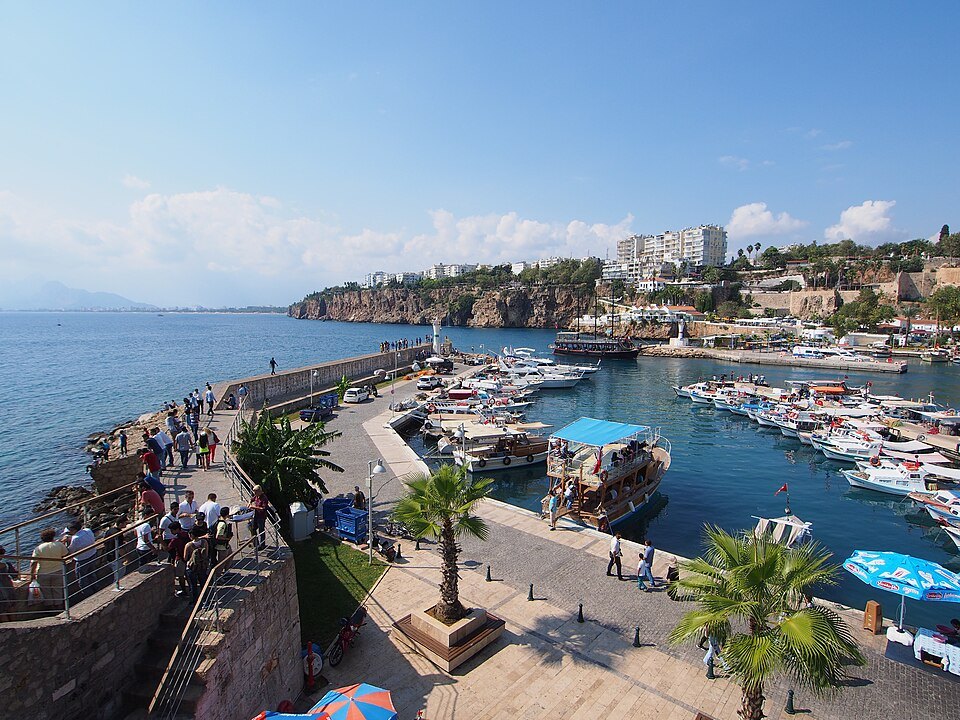
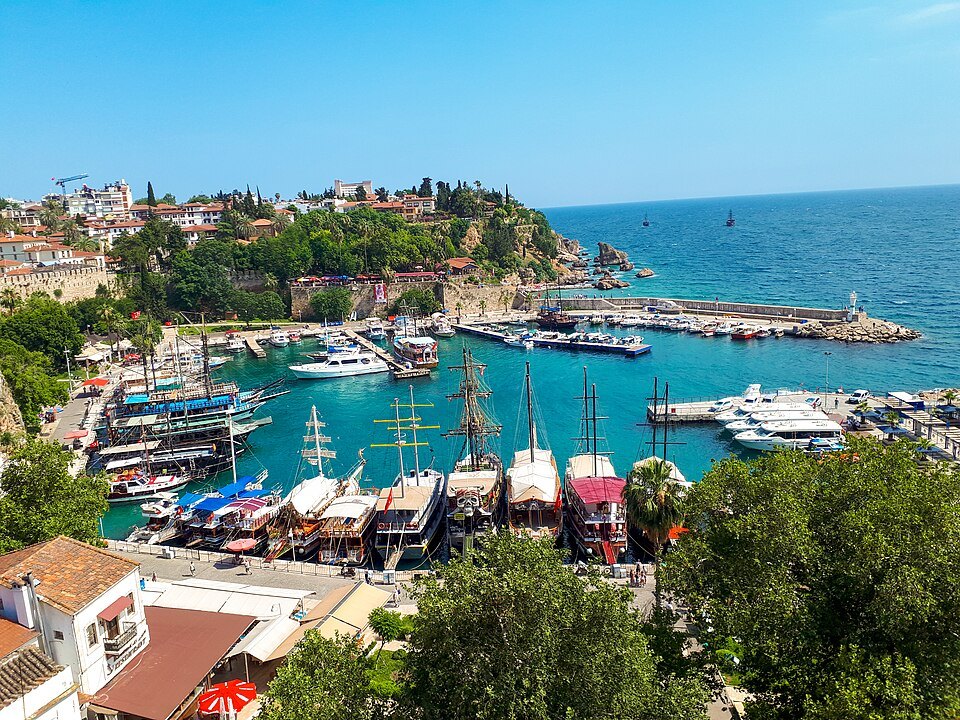
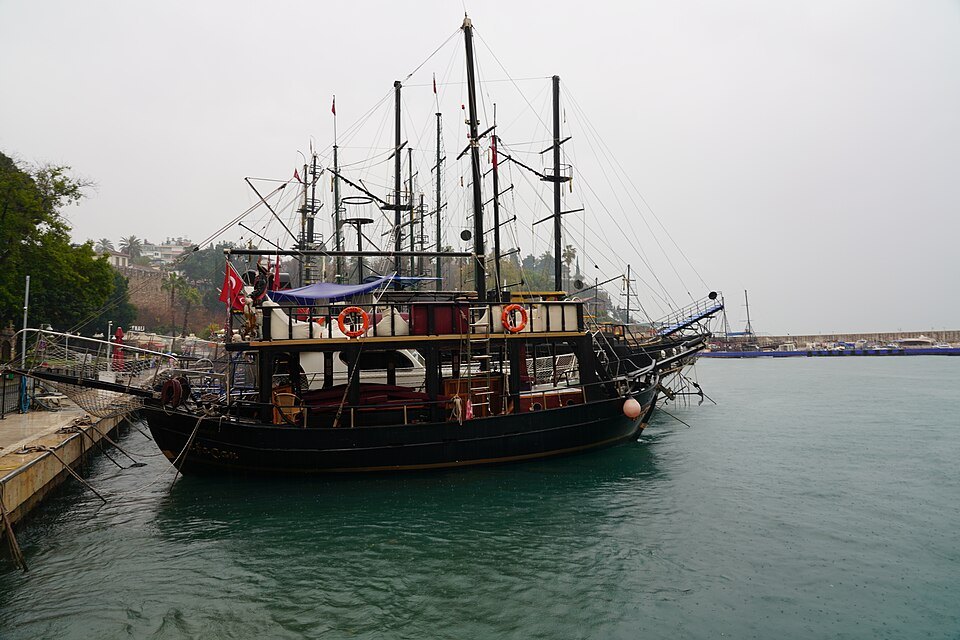
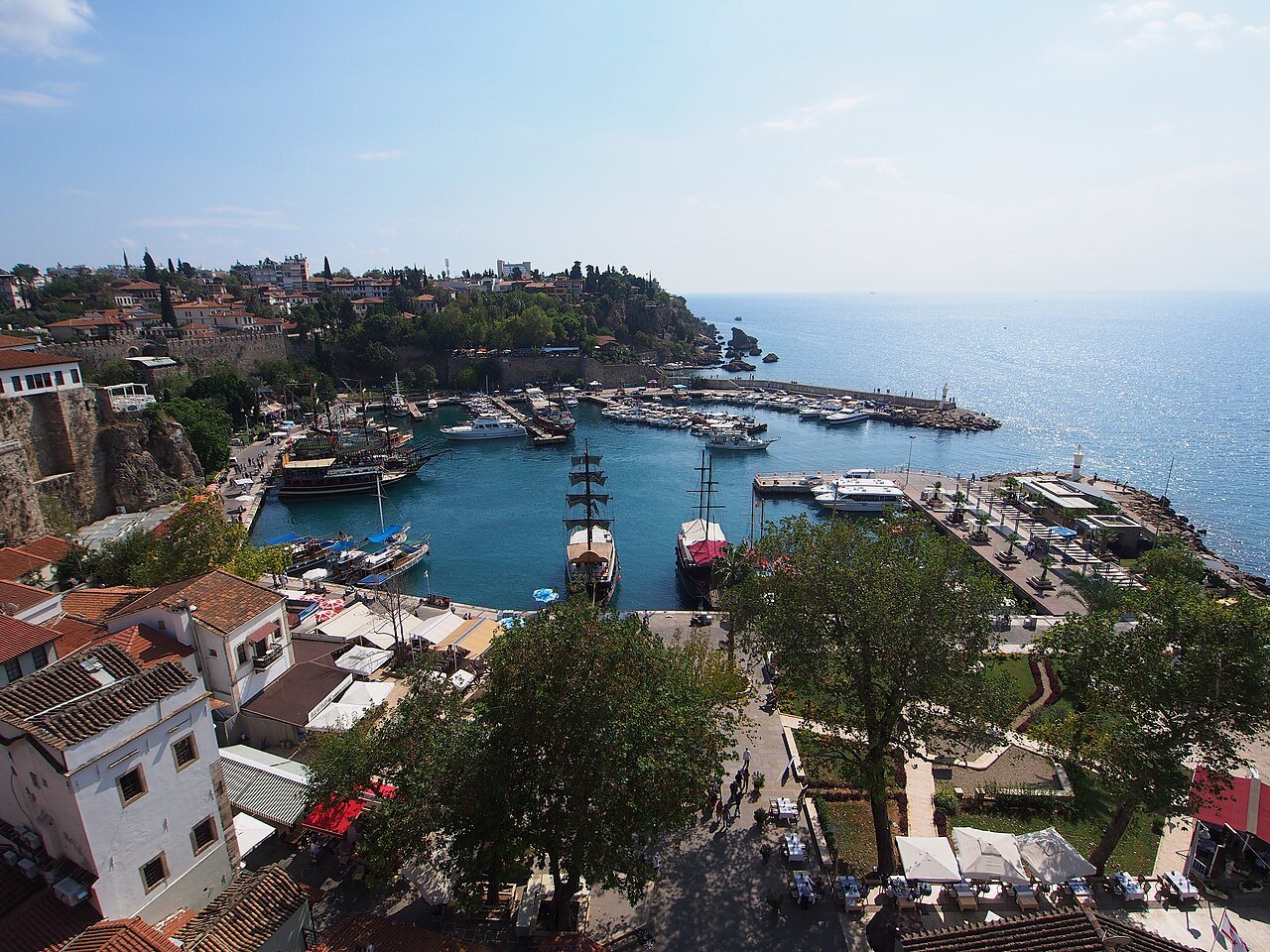
Below Kaleiçi, at the bottom of the cliff, a horseshoe of stone quay cut into the rock. It is the ancient harbor of Attaleia and it is the reason there is a city here at all: on a coast of cliffs, this was the shelter.
It served as the working port until the twentieth century, when commercial traffic moved west. What is left is a marina, a row of restaurants, and the boats that take people along the coast.
Getting down to it
The lanes of the old town drop to it, steeply, and there is a lift from the clifftop near the clock tower end.
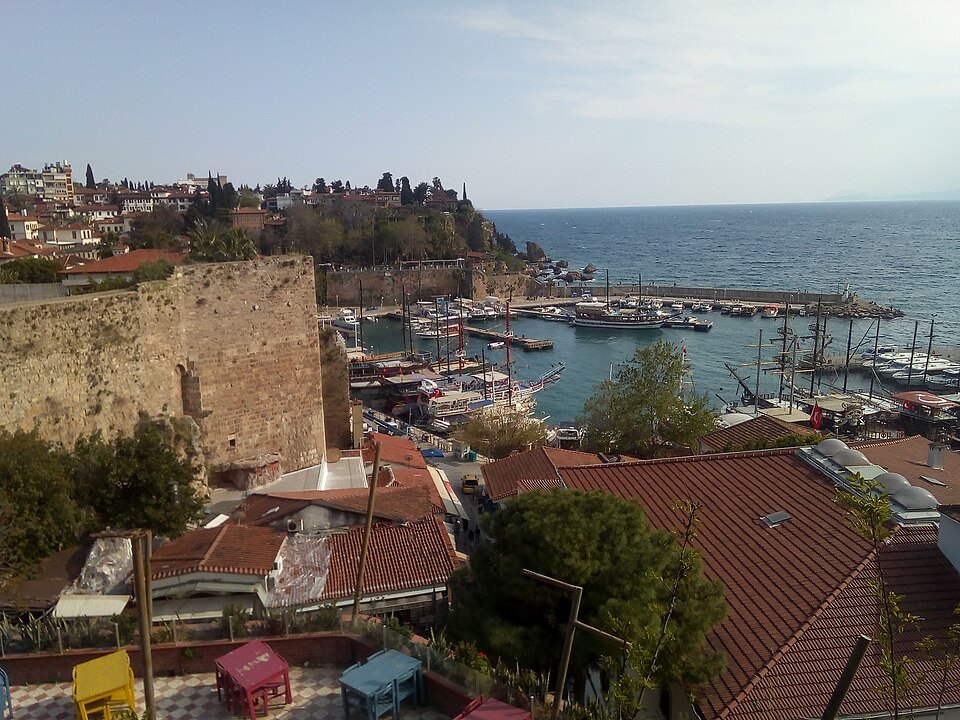
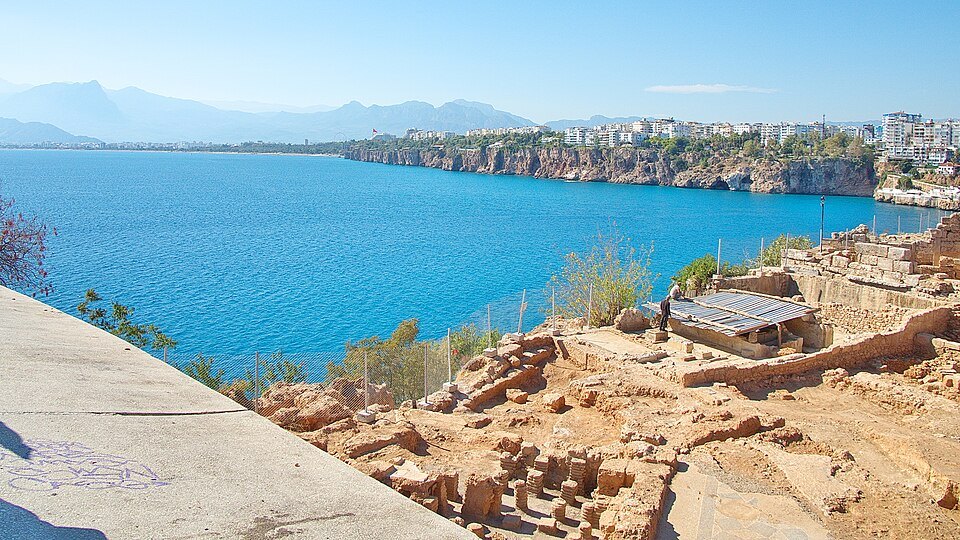
⭐ The view worth having is from above — from the terraces at the top of Kaleiçi, with the harbor directly below and the mountains across the bay behind it.
A natural harbor, walled in
The harbor was built in the Hellenistic period around a natural semicircular cove. Its entrance is 110 meters wide, and the present breakwaters were probably built on the remains of Hellenistic walls. In the past a tower stood on each side of the entrance, one of which may have served as a lighthouse, and a chain was stretched between the two towers to close the harbor. In 1472 a papal fleet raised the papal arms on the breakwater towers and, on its way home, carried off the harbor chain as a trophy for the Pope in Rome.
King Attalus II of Pergamon is regarded as the founder of the city, which was named Attaleia after him, and it served as a naval base for his fleet. Under Byzantium it was the capital of the theme of the Cibyrrhaeots on the southern coast of Anatolia. The historian Speros Vryonis described it as the main naval station on that coast, a major commercial center and the most convenient harbor between the Aegean and Cyprus, where alongside the local merchants you could expect to see Armenians, Saracens, Jews and Italians.
Its position on the sea also saved it more than once. When the Seljuk sultan Kaykhusraw tried to take the city in 1206, its Italian-born lord Aldebrandus called on Cyprus for help and received 200 infantry; after the Seljuk conquest of the early 13th century the city was ruled from Cyprus again between 1361 and 1373.
Excavations in 2008 found remains from the 3rd century BC, which suggests that Attaleia was a rebuilding and expansion of an earlier town. The city passed to Rome in 133 BC, when Attalus III left his kingdom to Rome on his death.
Two hundred boats, then almost none
In the second half of the 17th century the Ottoman traveler Evliya Çelebi described a town of narrow streets and 3,000 houses, which had grown beyond its walls, with a port that could hold up to 200 boats. By 1920 the harbor was described as small and unsafe for ships in winter. The city was then exporting wheat, flour, sesame, livestock, timber and charcoal, the timber and charcoal often to Egypt and the rest mainly to Italy and the Greek islands. Today the old harbor is a marina for yachts and excursion boats.
The Forty Steps and the harbor mosque
Two old routes still link the harbor to the town above. The Kırk Merdivenler, the Forty Steps, is a stairway thought to have been built by the Venetians, which comes down to the harbor through the city wall on its eastern side. Its gate, known to have existed in the Ottoman period, was later demolished. In Ottoman times the stairway and its gate were the link between Kaleiçi and this part of the harbor, which is why this stretch of quay was called the Merdivenli İskele, the landing with the stairs.
On the quay itself is the small İskele Mosque, built in 1903 by Hüseyin Kenan Paşa, the governor of the Teke district. It is hexagonal, built of cut stone on six piers joined by low arches and covered with a tiled pyramid roof. It has no pulpit, and its wooden cylindrical minaret is on the north-west side. Water from a natural spring runs under the ground floor and is thought to have supplied its fountain for ablutions in the past.
Along the quay today
The municipality's guide to Kaleiçi lists two small museums at the harbor. The Marine Biology Museum shows about 500 species of sea creatures from Turkey's seas, with attention to protected species. The Antalya Toy Museum, opened by the metropolitan municipality on April 23, 2011, with the writer Sunay Akın as adviser, holds about three thousand toys made between 1870 and 1980 in countries including Germany, the United States, Russia, Japan and Turkey. Check that both are open before you plan around them. The boat trips that leave from the quay run along the cliffs, and one of the sights they are sold on is the Lower Düden falls pouring into the sea.
Sources