What it is
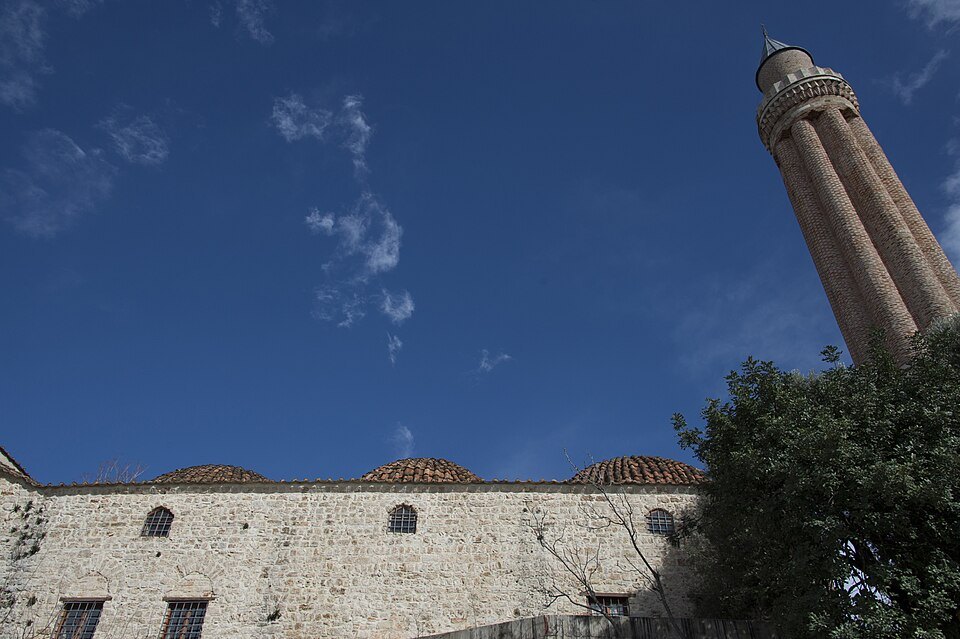
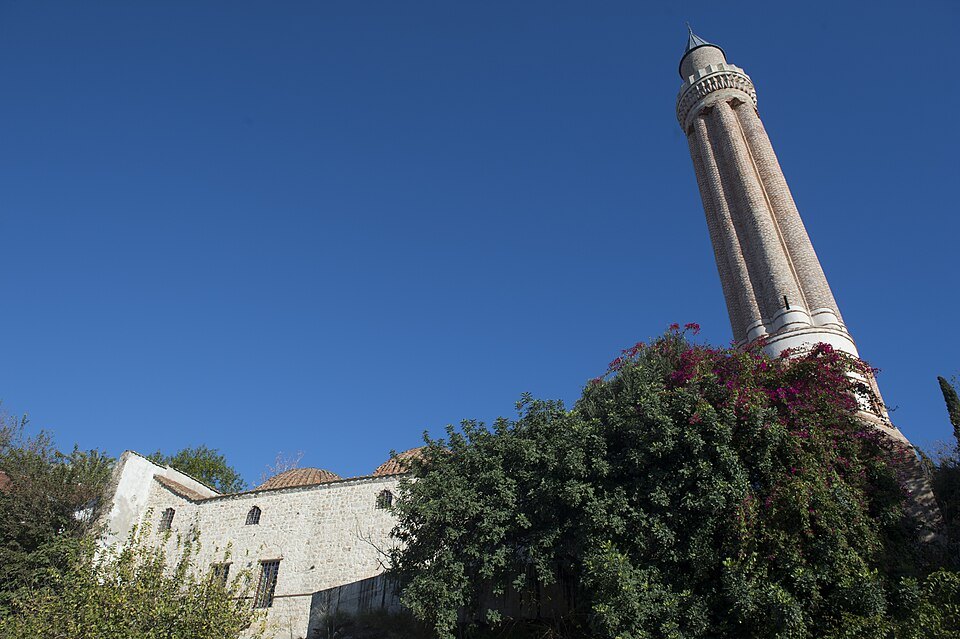
Yivli Minare — the fluted minaret — is Antalya's emblem and the thing you use to find your way. It is Seljuk, thirteenth century, built of dark red brick in eight deep flutes, with bands of turquoise tile still visible near the top.
⭐ It is not a decorated tower attached to an Ottoman mosque; it is older than the Ottomans here, and it marks the point where Anatolia's Seljuk architecture reached the Mediterranean.
Where to see it from
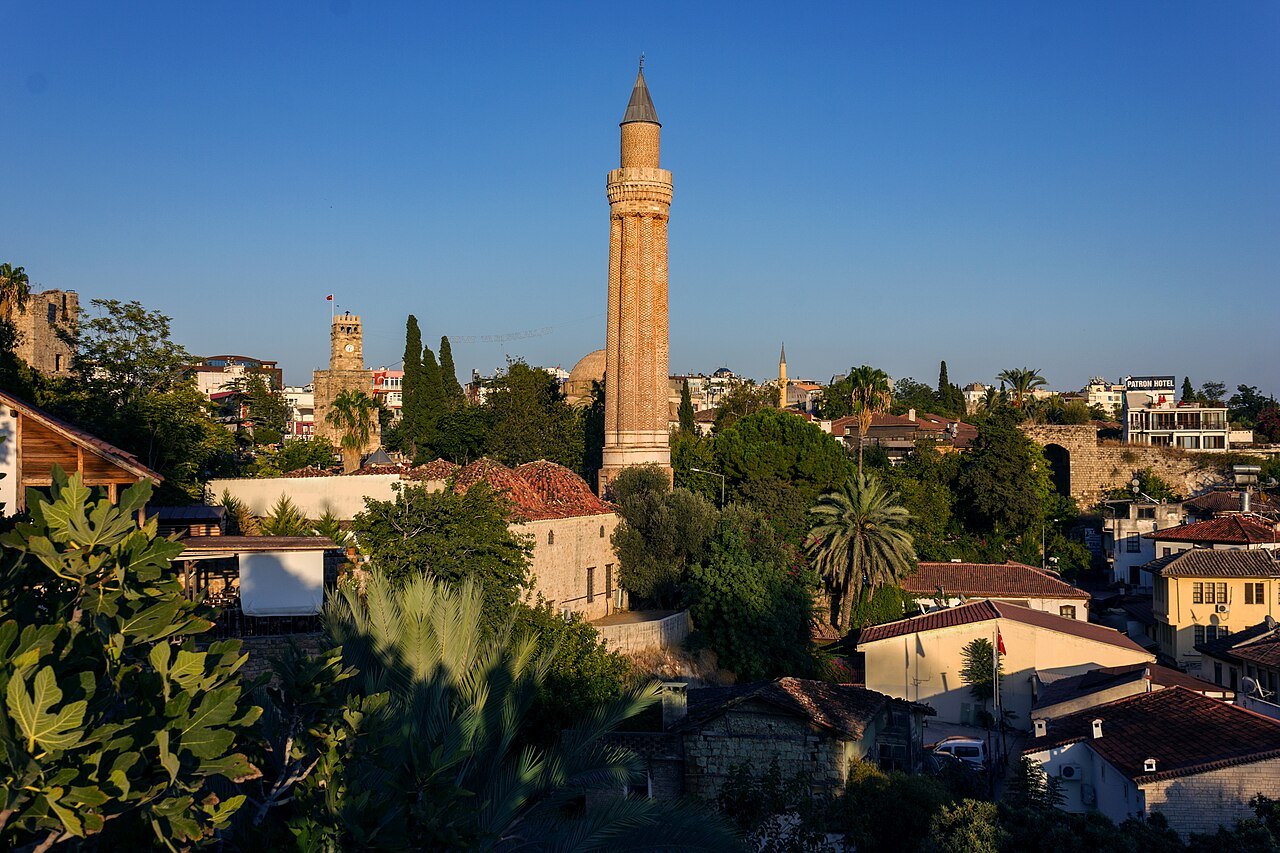
Close up the minaret is hard to photograph whole — the courtyard is tight. The view that works is from above and away: from the higher lanes of Kaleiçi or from the road below, with the brick shaft rising out of a field of terracotta roofs.
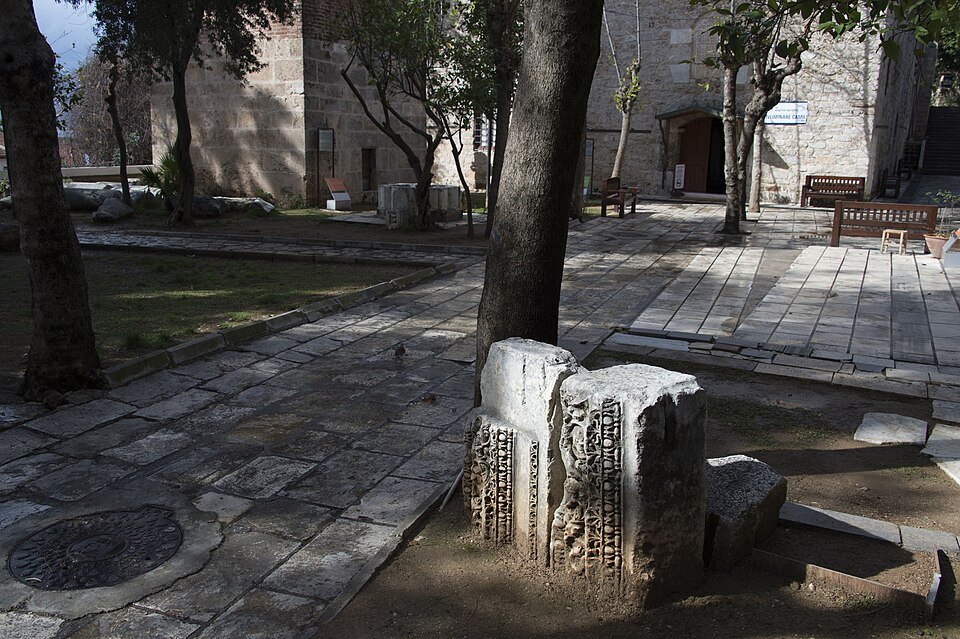
The mosque at its foot and the buildings around it are later, and the complex has been added to repeatedly. The minaret is the constant.
A mosque on a church
The mosque stands on Cumhuriyet Caddesi near Kalekapısı Square. Some researchers believe a Byzantine church stood here first and was converted into a mosque under the Seljuks; the English account dates the first mosque on the site to around 1230. The minaret is attributed, on grounds of style, to Sultan Alaeddin Keykubad I, who reigned from 1220 to 1237 and was a great patron of building across Anatolia.
The mosque was ruined during the period of Lusignan rule over Antalya and rebuilt in 1373 by Mehmet Bey of the Hamidid dynasty, with the architect Balaban el-Tavaşi. The new prayer hall, rectangular and covered by six domes in two rows on twelve columns topped with reused ancient capitals, is the oldest surviving example of the multi-domed mosque in Anatolia. In the twentieth century the building housed the Antalya Museum for a time. It was restored in 1953 and 1961 and again between 2007 and 2010, when old water channels were found beneath it; they can be seen through a glass panel in the floor.
The minaret
The minaret rises from a massive square stone base. Its shaft is built of red brick laid in eight half-round flutes, set in a lime mortar, and was originally covered in turquoise and dark blue tiles, fragments of which survive near the top, along with Kufic inscriptions and a balcony decorated with muqarnas. Ninety steps lead up to the balcony, and above it the tower narrows to a final section and a pointed cap. The municipality and the English account give its height as 38 meters; the culture ministry's portal says about thirty.
It is often compared with other fluted minarets in Turkey, such as those of the Burmalı Minare Mosque in Amasya and the Gedik Ahmet Paşa Mosque in Afyonkarahisar, but it stands out for its height and its age. It has been on UNESCO's World Heritage Tentative List since 2016, and the mosque is still a working place of worship.
The complex around it
The minaret is the center of a group of buildings from several centuries. The Mevlevihane, a lodge of the Mevlevi dervishes who followed the teachings of Rumi, was built in 1225; it has a domed main room with small rooms around it and an upper floor reached by a staircase, and it was used for their ceremonies of remembrance and whirling. The municipality's account dates it to 1225, while the culture ministry notes that a nineteenth-century source names Prince Korkut as its founder and that it served as a Mevlevi lodge from the early sixteenth century; Evliya Çelebi recorded it in use in the seventeenth. Today the lodge, a bathhouse and the two tombs form the Mevlevihane Museum, with displays of Mevlevi garments and objects, and the museum hosts readings of Rumi's Mesnevi, Sufi music and sema ceremonies.
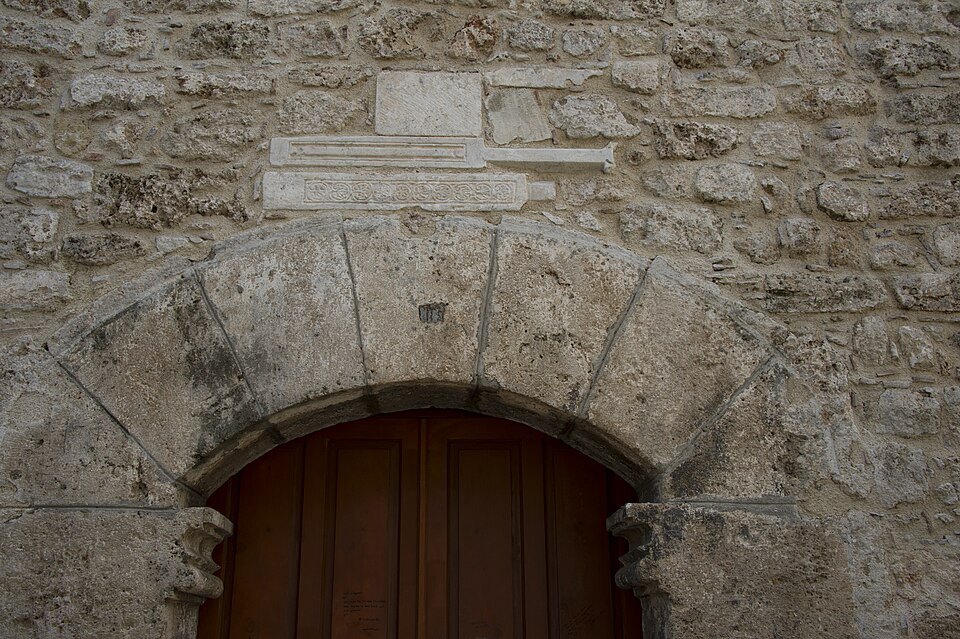
Nearby are two tombs. The tomb of Zincirkıran Mehmet Bey was built in 1377 for the son of Mübarizeddin Mehmet Bey; a marble inscription records that it was built by a grandson of Yunus Bey for his dead son, and a stone carved like a chain handle over the door is thought to symbolize his nickname, the Chain-Breaker, earned when he ended Lusignan rule in Antalya. The hexagonal tomb of Nigâr Hatun (1450–1503), wife of the Ottoman sultan Bayezid II and mother of Prince Korkut and Fatma Sultan, built of dressed stone, rubble and brick, has a pyramid roof of Turkish tiles and an open marble sarcophagus inside.
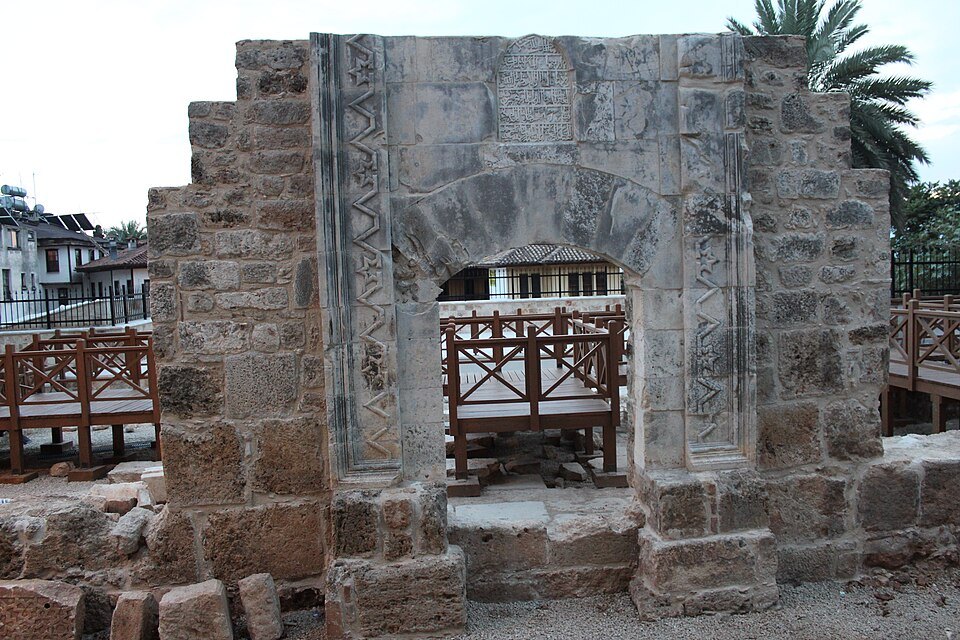
Two madrasas complete the group. The İmaret Medresesi, probably of the mid-thirteenth century, has an inner courtyard and four vaulted halls behind a monumental doorway with muqarnas, though most of its roof is gone and its inscription is too worn to read. Of the Atabey Armağan Medresesi, built in 1239, only the entrance and fragments of wall remain, with zigzag and half-star carving beside the door.
Sources
- Yivli Minaret Mosque — Wikipedia
- Kaleiçi — Antalya Büyükşehir Belediyesi
- Yivli Minare Camii — Kültür Portalı, T.C. Kültür ve Turizm Bakanlığı
- Mevlevihane Müzesi — Kültür Portalı, T.C. Kültür ve Turizm Bakanlığı