What it is
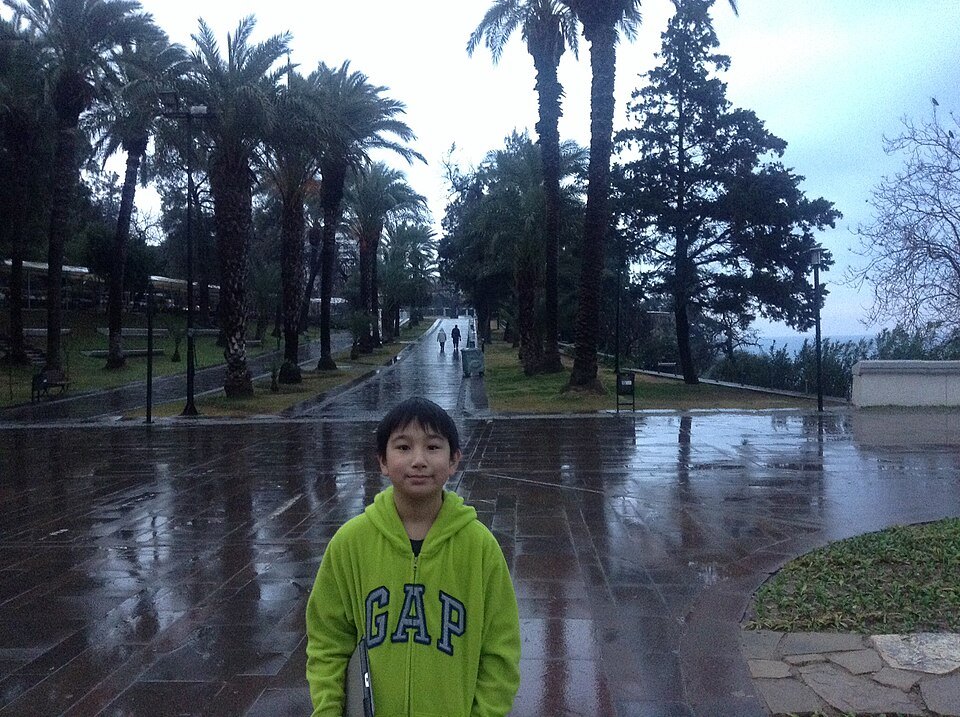
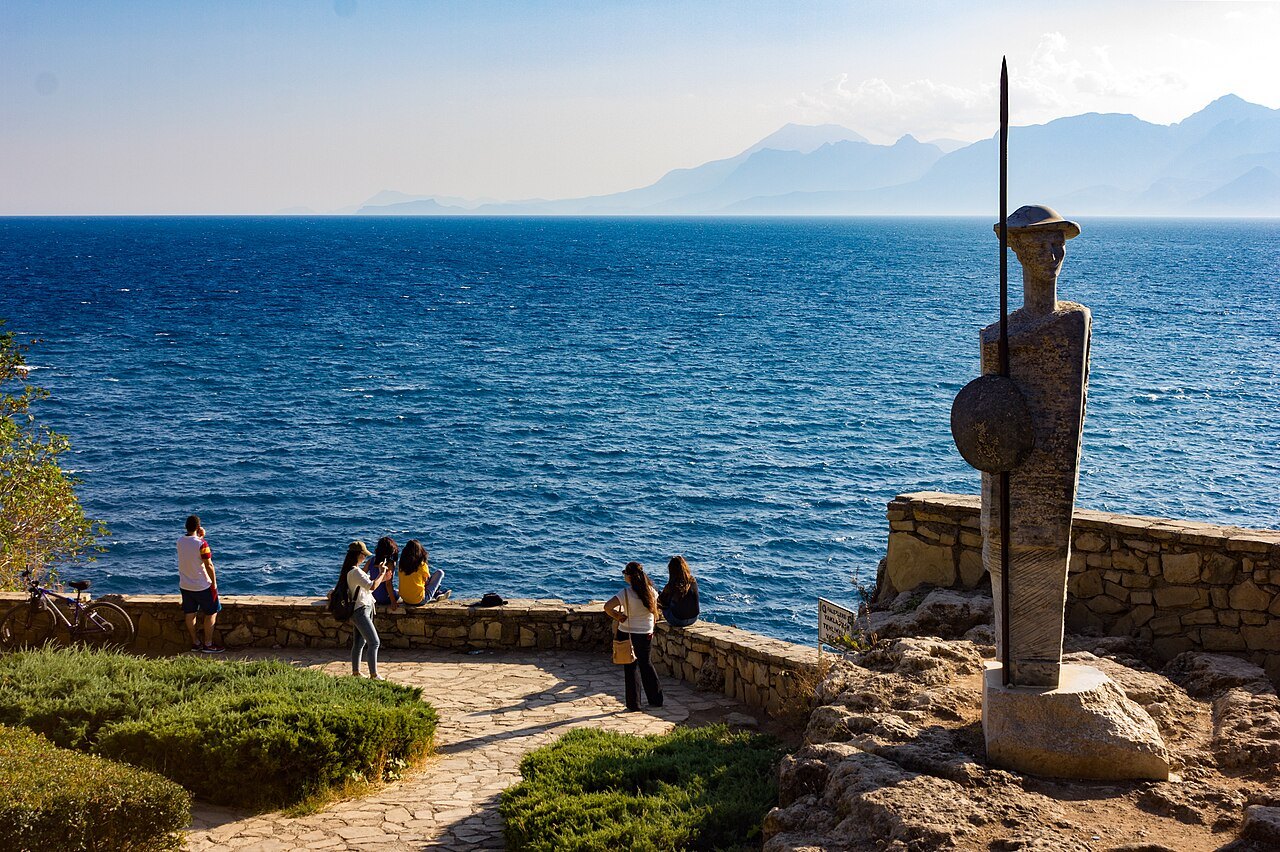
A long public park laid out along the cliff east of Kaleiçi: palms, flower beds, terraces and railings at the edge, with Hıdırlık Tower standing at the old-town corner of it.
Why come
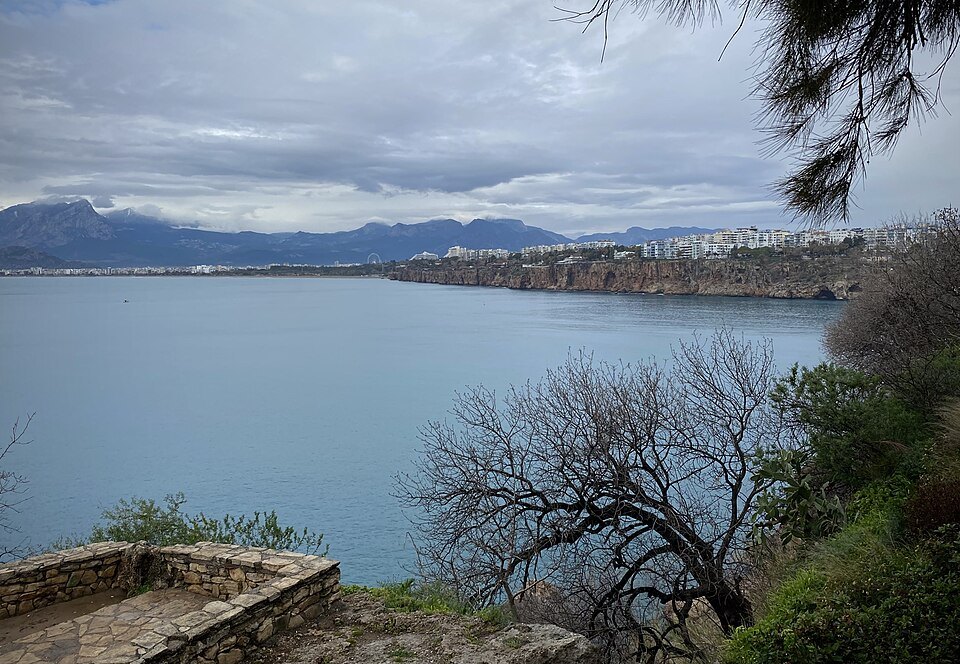
For the view along the coast and across the bay to the mountains, and because it is the obvious place to end a walk through the old town.
⭐ Late afternoon is the point. The park faces roughly west along the bay, and the whole city seems to come here for it.
From a garden to a park
Until the early twentieth century this was the Karaalioğlu, or Karaoğlan, Garden, an excursion ground at the edge of the town. On its Yenikapı side stood the Leski coffeehouse, the Attalos Club, the Nocera cinema, and the church of Agia Panteleimon with the cemetery of the city's Greek community. In the early years of the Republic the coffeehouse became the Vatan Kıraathanesi, the cinema became the Leyla, and the church was used as the building of the Türk Ocağı.
The garden began turning into a park in the early 1930s. Even then it was a picnic ground ringed with terebinth trees. The foundations of a silk-growing school were laid in 1929, a double road was finished in August 1930, a children's playground was added the same year, and on February 27, 1931, Gazi Boulevard was cut through the garden. In 1932 work began on the Halkevi, the building that now houses the municipality, and in 1934 a silkworm station was built next to the school.
The park itself is the work of Haşim İşcan, governor of Antalya. A society for beautifying and promoting the city was founded on August 14, 1940; work on a modern park began on March 2, 1941; and after three years it opened on April 29, 1943, as İnönü Park, designed by the architect Necmettin Ateş. Atatürk Stadium was built inside the grounds in the 1950s.
The terraces and the statues
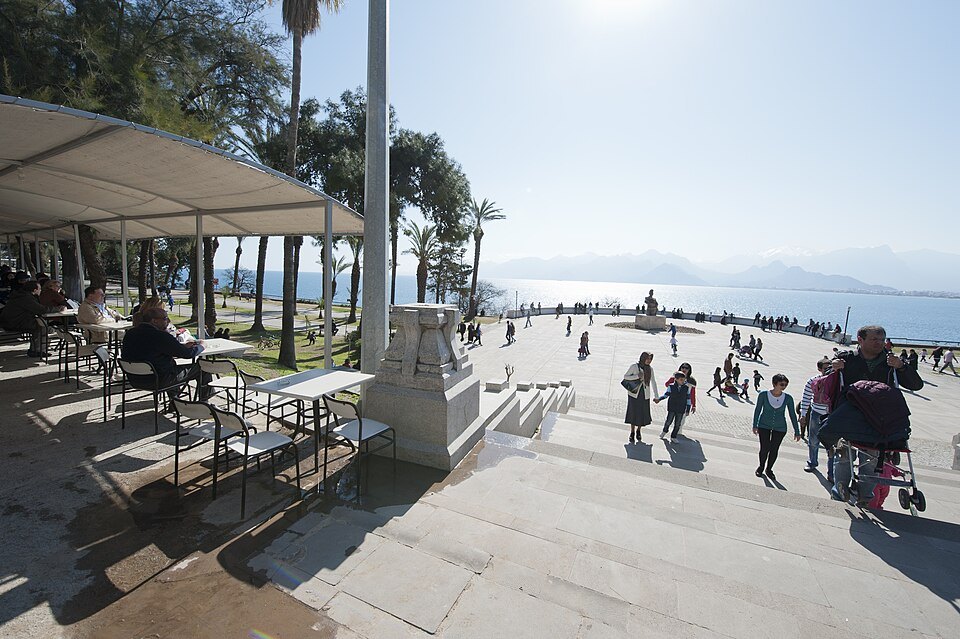
The park was laid out over 140 thousand square meters. Three parallel avenues run through it east to west toward the sea, and each one ends at a viewing terrace on the cliff edge, which is the easiest way to find your way around: walk down any avenue and you arrive at a view.
In the late 1970s the park was given a set of sculptures. On the second terrace is the Worker and His Child by Mehmet Aksoy, on the third is the Hand by Kuzgun Acar, and between the two stands Cahvar Göktaş's Don Quixote. In 2010 Aksoy added Nazım Hikmet in Prison, a monument to the poet unveiled on the 47th anniversary of his death and made with the metropolitan municipality and the Nazım Hikmet Culture and Art Foundation. Look out too for the frog sculptures toward the eastern end. The mayor's office and the municipal city theater are also in the park.
The cliffs underneath
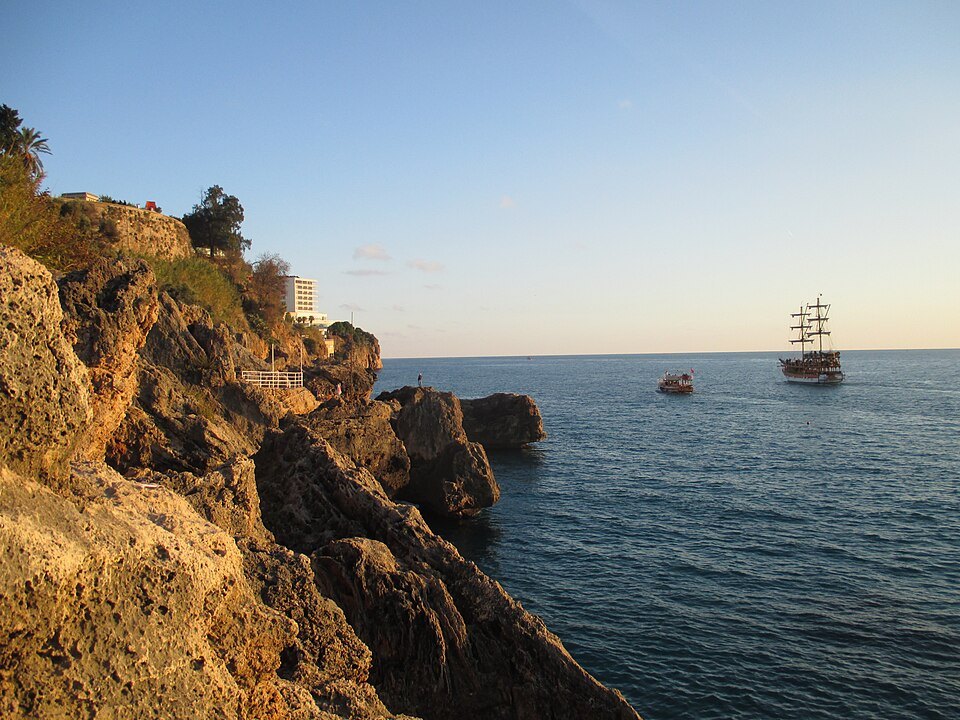
The park stands on the same cliffs that line the whole city. The municipality's description of Kaleiçi puts their average height above the sea at 40 meters and says they run for 20 kilometers along the south of the city, from the Konyaaltı side to Lara Beach. The rock is travertine, a layer that spreads north as far as the Bey Mountains, 30 kilometers away, over an area of 620 square kilometers. The Düden is the most important of the waterfalls that pour off these cliffs into the sea.
At the old-town corner of the park, Hıdırlık Tower is the oldest thing in sight. It is a two-story building with a square podium and a round drum, thought to be a monumental tomb from the first or second century AD; twelve fasces carved beside its main door have led to the suggestion that it was built for a Roman official.
Birds in the park
The park is also a place to watch birds. A book published by the metropolitan municipality in 2012 for the city museum in the park, based on observations made from June to October 2008, lists 54 species from 9 orders and 26 families that can be seen here, out of the 316 species recorded in the province. They range from gulls and rock doves to barn owls, scops owls and little owls, swifts, kingfishers, bee-eaters and Eleonora's falcons, and green parakeets. The author points out that some birds are here only in summer, some only in winter and some only on migration, so the list changes with the season.
Trees and flowers
A second municipal book, published in 2013 by the botanist İsmail Gökhan Deniz, describes the park's plants. At one entrance you are met by stone pines, firethorns and ironwood trees, at the other by araucarias, magnolias and bay laurels. The oldest trees in the park are the terebinths near the eastern viewing terrace, which grew here for centuries before the park was made and are protected; they flower from March to May and lose their leaves in winter.
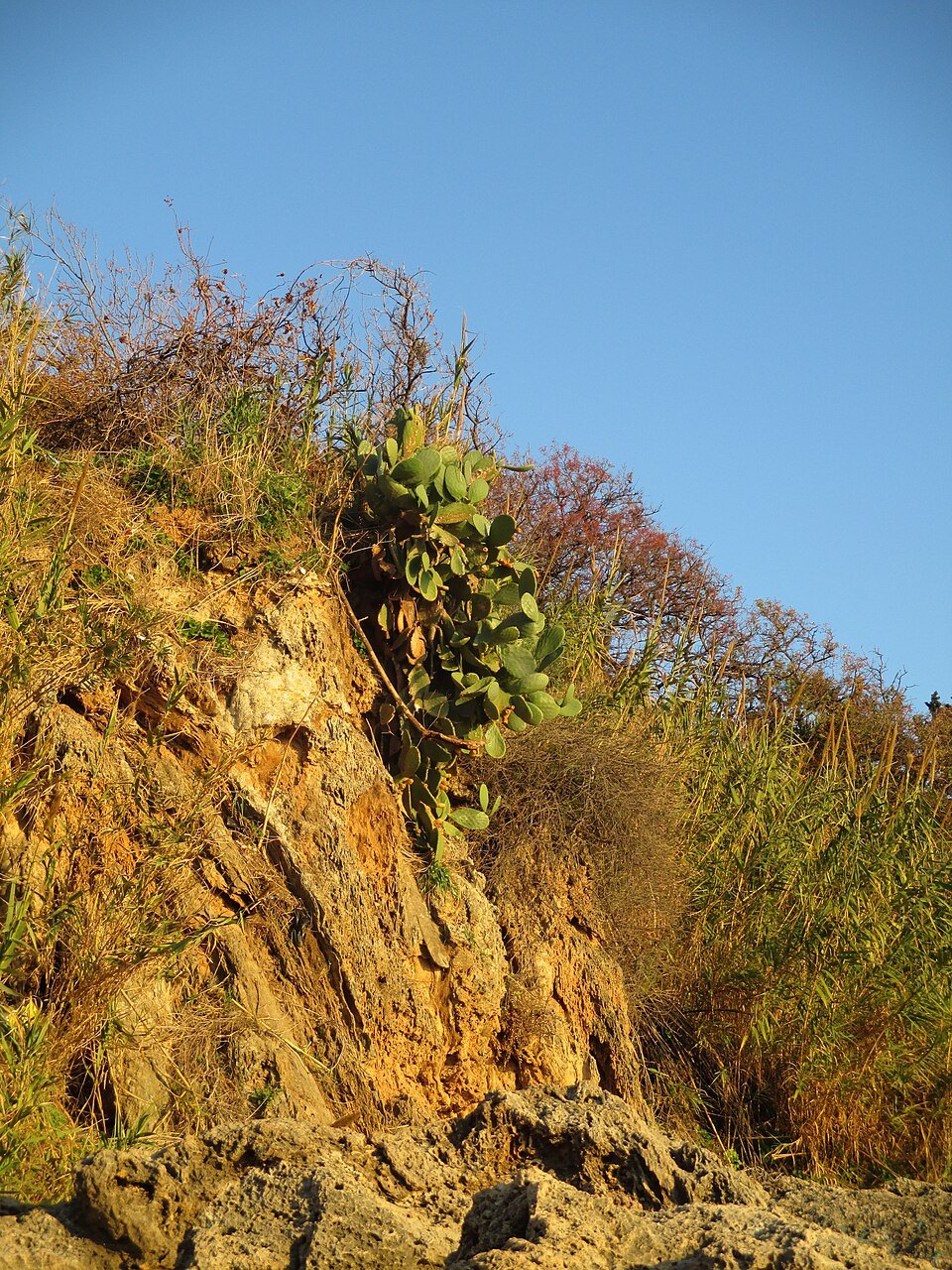
On the rocks near the sea grows a wild carnation, Dianthus elegans var. cous, a perennial with showy pink flowers from May to August that is found nowhere in the world but Turkey; the author calls it one of the park's natural sights. He is less fond of the palms: they are not native to Turkey, and he notes that their heavy use in parks and along roads draws serious criticism.
Sources
- Kaleiçi — Antalya Büyükşehir Belediyesi
- Antalya Karaalioğlu Parkı Kuşları — T. Albayrak, Antalya Büyükşehir Belediyesi (2012)
- Karaalioğlu Park — Wikipedia
- Antalya Karaalioğlu Parkı Bitkileri — İ. G. Deniz, Antalya Büyükşehir Belediyesi (2013)