What it is
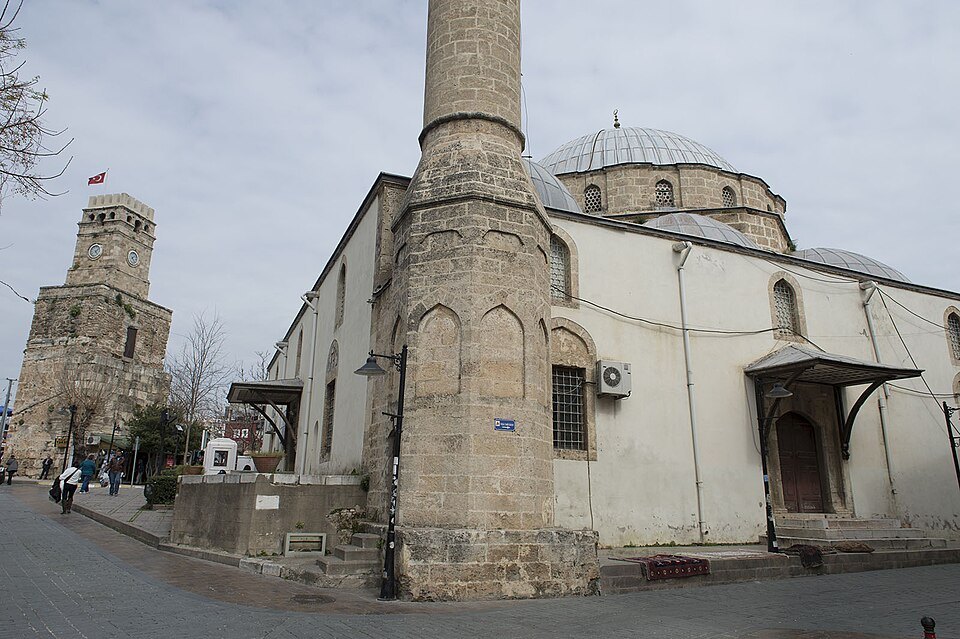
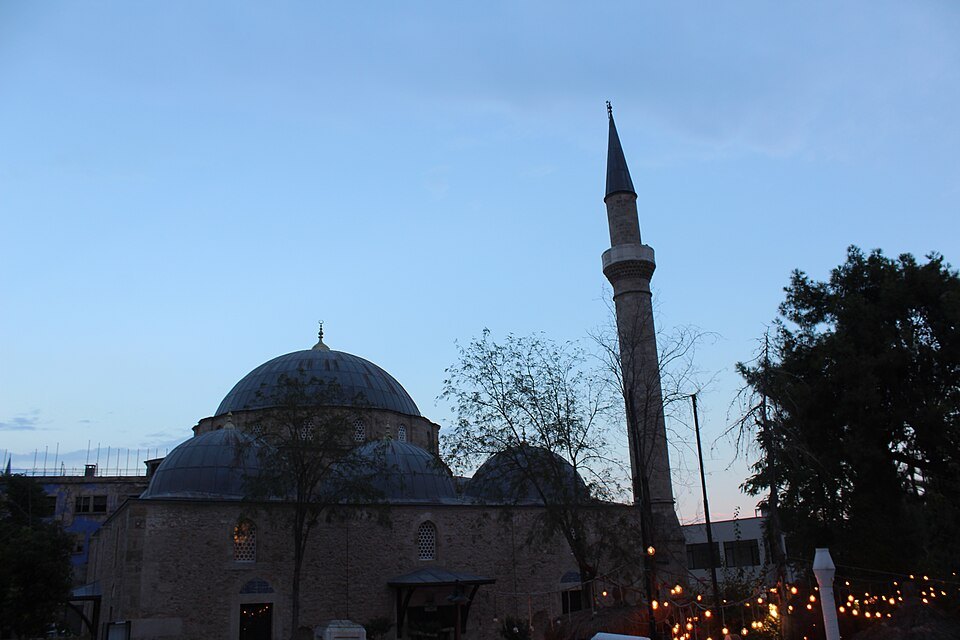
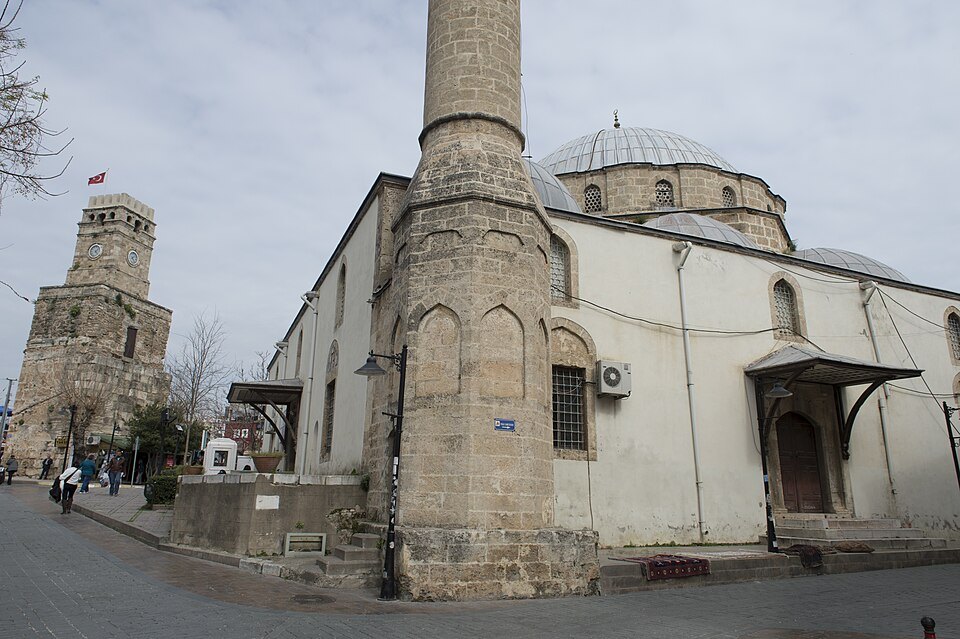
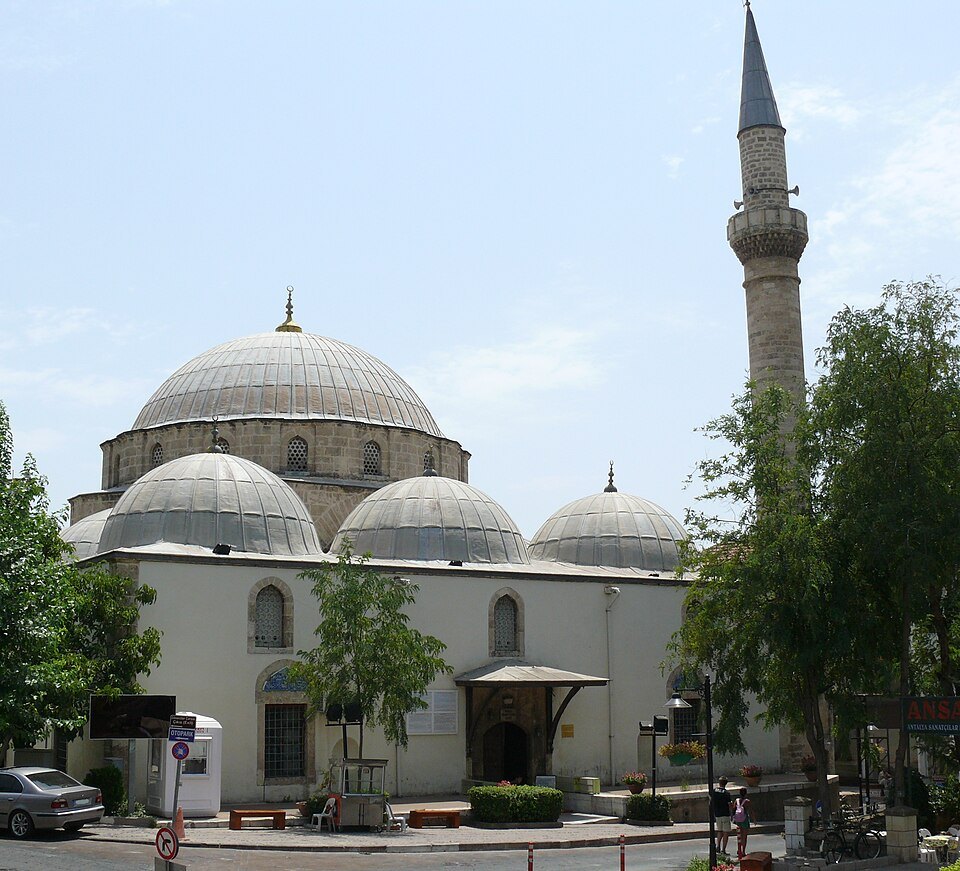
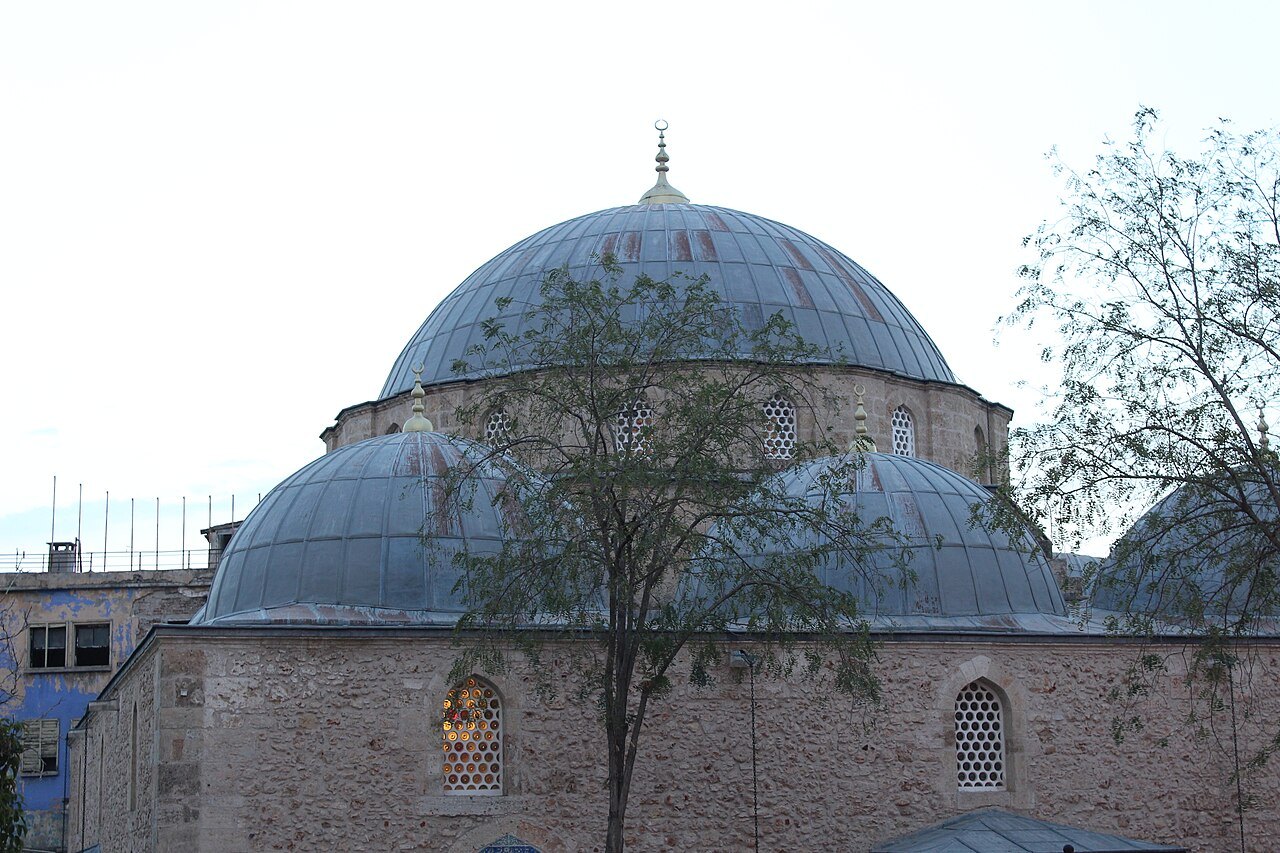
The main Ottoman mosque of the old town, standing at Kalekapısı beside the clock tower. A central dome on a high drum, three small domes along the north side, and a courtyard that opens straight onto the busiest corner in Antalya.
⭐ The detail worth stopping for is the tilework: tile panels set into the pointed arches above the windows, inscribed in ta'liq script.
Seeing it
The exterior and the courtyard can be seen at any time from the square. ⚠️ Inside it is a working mosque.
When it was built
The mosque was built for Tekeli Mehmet Paşa in the early seventeenth century. The municipality gives the years 1606 to 1617 and Koç University's AKMED inventory of Antalya's buildings 1607 to 1616; the exact dating has been the subject of a scholarly paper of its own. It has been repaired many times. The Ottoman traveler Evliya Çelebi already singled it out, describing it as richly ornamented, with a cramped courtyard and beautiful architecture.
Its address is Uzun Çarşı Street in the Tuzcular neighborhood, at the top of the old market street that runs down into Kaleiçi.
The building
The mosque has a nearly square plan. The lower part of its walls is rubble and the upper part cut stone, and it is entered by doors with low arches in the middle of the east, west and north sides. Every side except the south is symmetrical, with two rows of five windows, one for each story. The prayer hall is covered by a central dome on a drum pierced by 16 pointed-arch windows; the municipality describes the dome as buttressed by half-domes on the east and west. The north side, covered by three small domes, was taken into the prayer hall during a restoration in the nineteenth century.
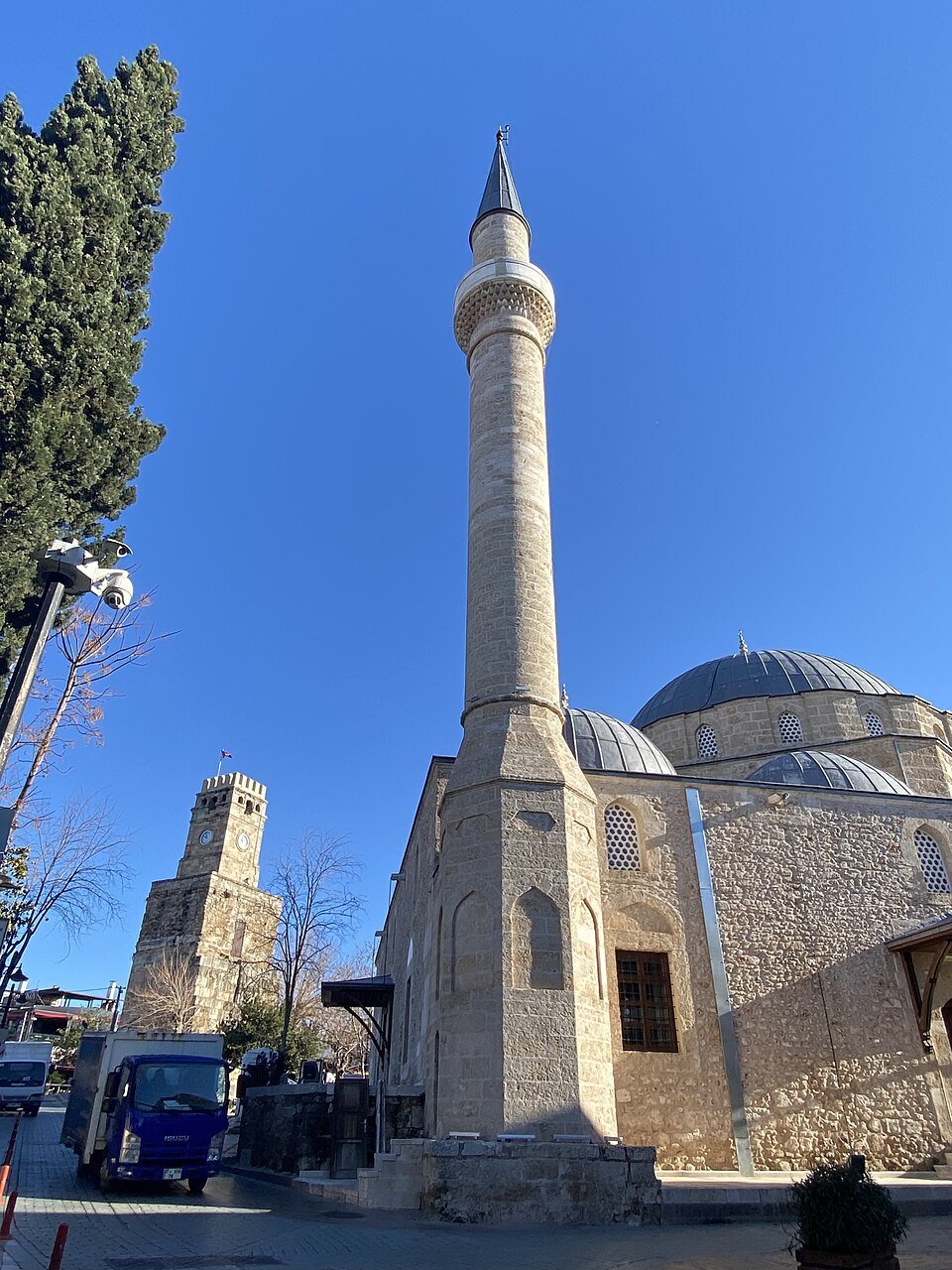
The mihrab, framed with moldings and topped with muqarnas, sits in the middle of the south wall, with the marble pulpit just east of it. A wooden women's gallery fills the north-east corner, reached from the east by a staircase of 12 steps. The cut-stone minaret, at the north-west corner, has a single balcony above four rows of sawtooth eaves and a honeycomb gallery, and is topped by a pointed spire.
Tiles and a poem
The tilework is the thing to look for. Tile inscriptions in ta'liq script fill the pointed tympana of the windows on either side of the north door outside, and of all the ground-floor windows inside. Around the inside of the mosque, starting to the right of the mihrab and finishing out in the courtyard, runs a rarity: the Munfarija, a twelfth-century ode by an Egyptian poet, which the regional director of foundations called the feature that makes the building unlike any other mosque. At the foot of the dome is the Surah al-Fath, the Victory chapter of the Quran.
What the restoration found
A restoration by the General Directorate of Foundations began in May 2018 and turned up a great deal. The cement plaster on the outside was removed and the lead roof was replaced entirely. Inside, two tile panels that had been lost were uncovered by stripping later layers. Under the Baroque-style decoration in the domes, the restorers found classical Ottoman painted ornament, and under a coat of oil paint they found finely carved woodwork in the sultan's gallery and the muezzins' gallery, with more painted motifs in the women's gallery. The old brick floor came to light as well.
The plan in 2020 was to reopen the mosque for worship in January 2021.
Outside, the octagonal fountain that had been added to the courtyard in 1977 was taken away, which widened the courtyard enough for funeral prayers. Digging for a toilet block revealed remains from the Roman Imperial period: a geometric mosaic, two cisterns, two earth ovens and three tombs. The plan announced at the time was to cover the mosaic area with glass so that visitors could see it.
The same director pointed out that old photographs show the clock tower next door once matched the mosque, with a dome on top that was later lost, and he described its present top as an imitation out of keeping with the historic setting. Excavations were announced around and inside the tower, with the aim of opening it to visitors in its original form and keeping the Roman, Byzantine, Seljuk and Ottoman traces found there.
Seeing it today
It is a working mosque again, at the busiest corner of the city. Walk around to the north side first to see the tiled window arches from outside, then go in outside prayer times, dressed for a mosque, to see the inscriptions running around the walls and the painted dome. The fluted minaret and the rest of Kaleiçi are a few minutes downhill.
Sources
- Tekeli Mehmet Pasha Mosque — AKMED, Koç University
- Kaleiçi — Antalya Büyükşehir Belediyesi
- 4 asırlık Tekeli Mehmet Paşa Camisi — NTV (2020)
- Tekeli Mehmet Pasha Mosque — Wikipedia