What it is
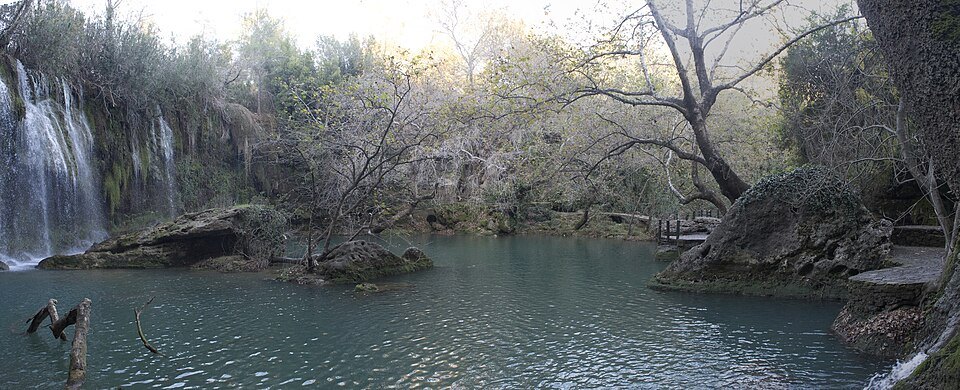
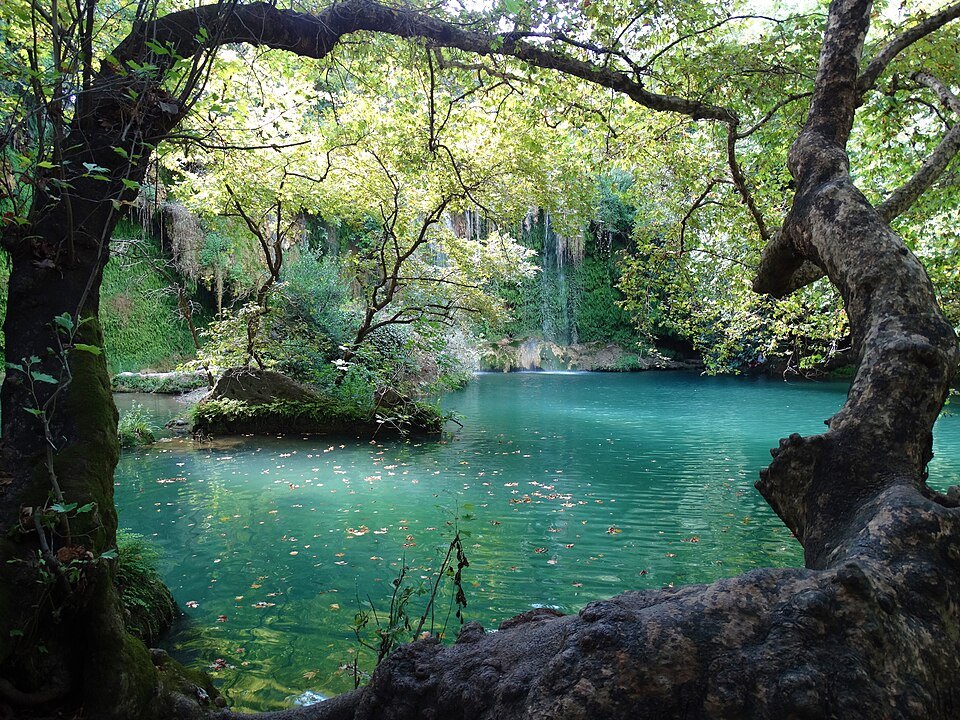
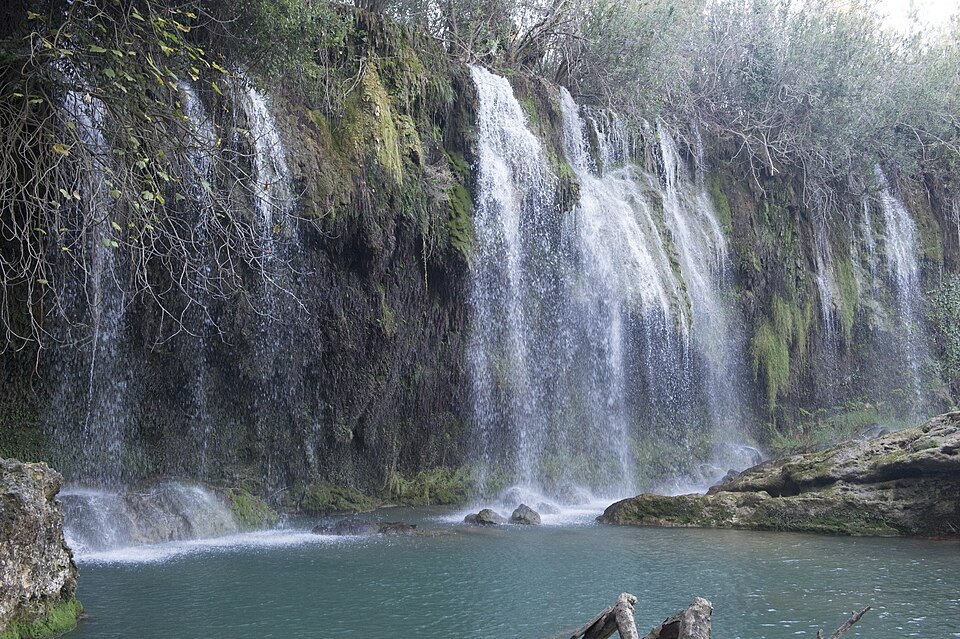
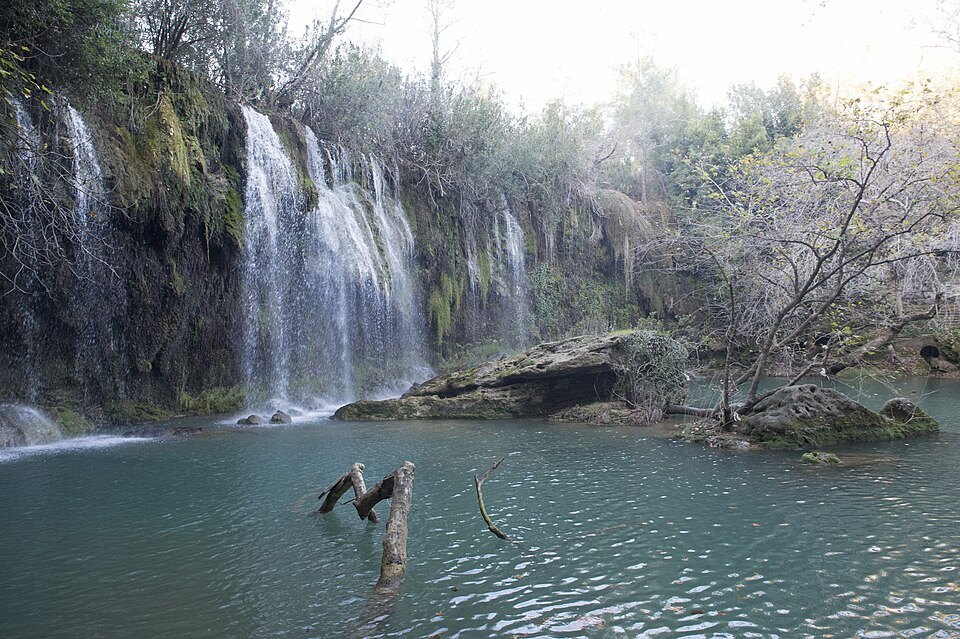
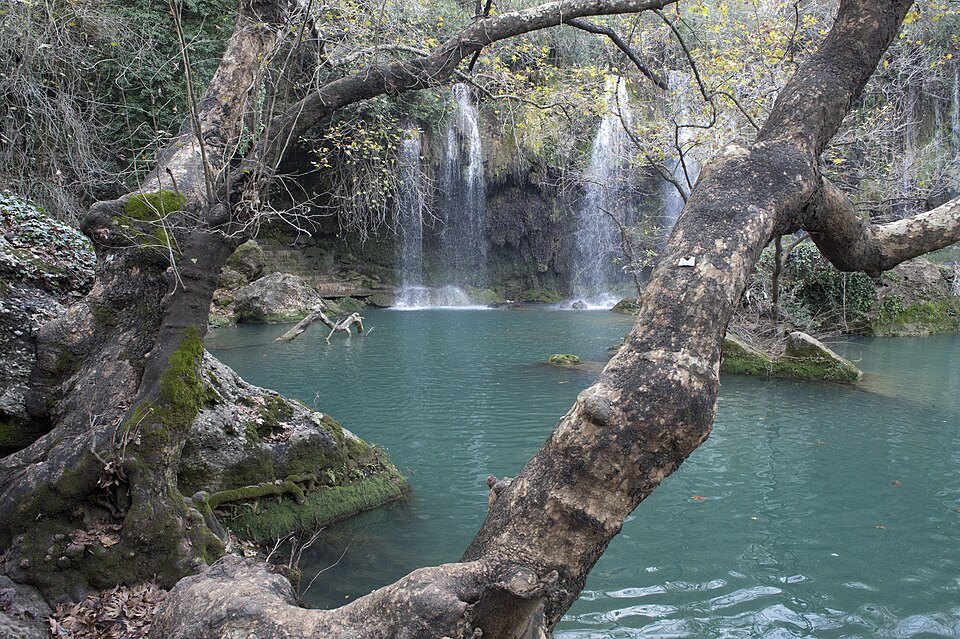
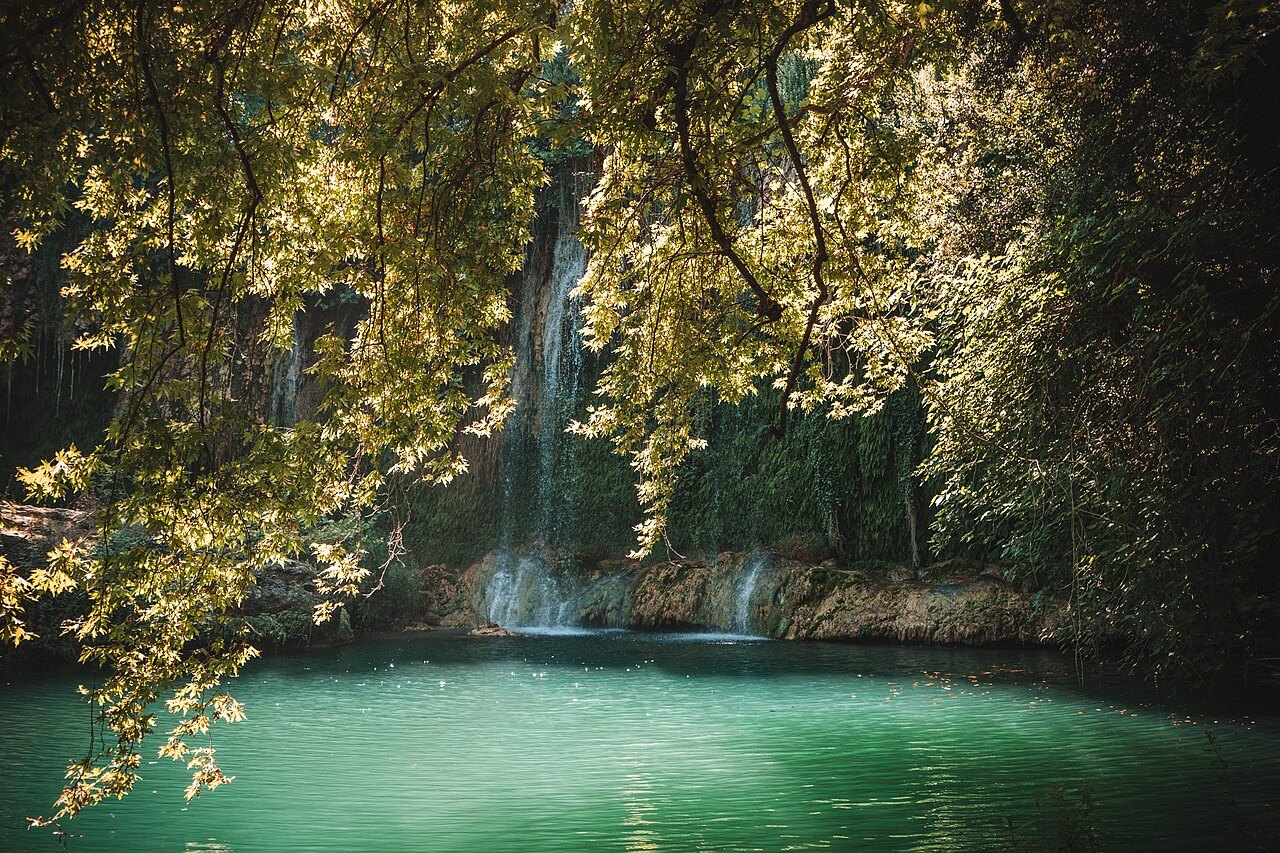
A nature park north-east of the city where a stream drops over a travertine lip into a deep green pool, with smaller falls below it and a path that loops through the pines and along the gorge.
It is the quieter of the two waterfalls near Antalya — Düden is the famous one — and it feels much more like a walk in a wood than a sight.
Getting there and around
It is outside the city and there is no way to walk it; a car, a taxi or a tour is the answer.
⚠️ The falls depend on the season and on how much water is being taken upstream. After a dry summer they can be modest.
The fall and the canyon
The main fall drops about 18 meters, and below it the stream runs on through a canyon about two kilometers long, linking seven small pools with a string of little cascades. The water belongs to one of the tributaries of the Aksu, at the point where it comes down off Antalya's plateau to the coastal plain. Like the river it feeds, it depends on rain and snowmelt: in the summer months the fall can shrink to a mere trickle, and the spring is when it is at its fullest.
The Aksu itself is a big river with a long history. It forms near Isparta, where waters from the Akdağ and Davraz mountains join, passes through Lake Kovada, picks up the waters of Lake Eğirdir and the larger Göksu, and reaches the sea in the Gulf of Antalya. Karst springs in the limestone feed it, and its level drops in summer and autumn. In the Bronze Age it had a Hittite name, Kaştaraya, and a treaty of the Hittite king Tudhaliya IV made it the border between the Lukka lands to the west and the region of Tarhuntassa to the east.
Its catchment covers about 8000 square kilometers, most of it in the provinces of Isparta and Antalya. In its lower course the river spreads across the plain in braided channels and is used heavily for irrigation, and the silt it carries down has made the soils along it fertile. The forested slopes around the falls are the last high ground before that plain begins.
A protected pine forest
The falls and their picnic grounds were laid out as a park and opened to visitors in 1986, over an area of 33 hectares. On May 21, 1991, the Ministry of Environment and Forest set aside a much larger area, about 586 hectares, as the Kurşunlu Waterfall Nature Park, for a landscape where healthy forest and a rich plant community meet striking forms of water and rock.
Turkish red pine dominates. Among the pines, singly or in small groups, are oriental plane, bay laurel, carob, wild olive, mastic, willow and fig trees, and the undergrowth is myrtle, hawthorn, oleander, blackberry, wild rose, spurge, tamarisk, kermes oak, thyme, wild mint, ferns and climbing plants. In and around the water you can find water mint, reeds, threads of green algae and water lilies.
What lives here
The park's animals include wild boar, foxes, rabbits, squirrels, bats, hoopoes, woodpeckers and turtle doves, with carp and freshwater turtles in the pools and snakes and lizards among the rocks. The municipality's waterfalls guide says the chances of meeting a rabbit, a squirrel, a woodpecker or a turtle on the walking paths are high, and that the park's flora and fauna make it a place for nature walks and for watching plants and wildlife.
Facilities and when to go
Inside the picnic area are viewing terraces, a children's playground, a restaurant, a parking lot, walking paths, drinking water and toilets, so it works as a half-day outing with a meal. Day picnics and walks in the forest are what people come for; there is nowhere to stay inside the park. The nature park's own description recommends the months from April to December as the best time to visit.
By road, the park is reached by a seven-kilometer side road that heads north from the Soğucaksu bridge on the Antalya–Aksu road, about twenty minutes by car from the center. Municipal buses and minibuses also run out from the city. Tours in all-terrain vehicles are run near the waterfall all year round, so expect some company on the approach roads.
Kurşunlu or Düden?
The two waterfalls near the city are often confused, and they are quite different outings. The Düden falls 40 meters off the cliffs straight into the Mediterranean, and its upper falls sit in a city park in the Kepez district. Kurşunlu is lower, at about 18 meters, but it is set in a pine forest at the head of a canyon of pools, with a much larger protected area around it.
If you want the famous view, see the Düden. If you want to spend a few hours walking under trees beside water, Kurşunlu is the better choice, and a visit in spring, when the water is high, shows it at its best.
Sources
- Antalya'nın Şelaleleri — Antalya Büyükşehir Belediyesi (2023)
- Kurşunlu Waterfall Nature Park — Wikipedia
- Kurşunlu Şelalesi — Vikipedi
- Aksu Çayı — Vikipedi